How Do I Prove Nursing Home Negligence?
When a family member in a long-term care facility suffers an injury, it’s natural to feel distressed and seek answers. The trust you placed in the facility feels broken, and you need to understand what happened and what you can do. The path to establishing responsibility centers on a legal concept called the “standard of care,” which is the level of attention and caution that a reasonable person (or facility) would exercise in the same circumstances. Demonstrating a failure to meet this standard is the foundation of a negligence claim.
Proving nursing home negligence involves gathering specific evidence to show that a facility failed to provide the accepted standard of care, and this failure directly caused your loved one’s injury or harm. This process requires carefully documenting everything from medical records and photographs of injuries to witness statements and official reports from the facility itself.
Reach out to a personal injury lawyer who can help gather the necessary evidence, assess whether the standard of care was breached, and guide you through the next steps—contact us today for a free consultation.
Key Takeaways about How to Prove Nursing Home Negligence
- Proving nursing home negligence hinges on showing that the facility failed to meet the legally required standard of care, which resulted in harm to a resident.
- Evidence is crucial and can include medical records, photographs, videos, witness testimony from staff or other residents, and official facility incident reports.
- Massachusetts law establishes a Bill of Rights for nursing home residents, which outlines the specific care and treatment they are entitled to receive.
- The four legal elements that must be established are Duty (the facility’s obligation to care for the resident), Breach (the failure to meet that duty), Causation (the link between the breach and the injury), and Damages (the resulting harm).
- Official complaints can be filed with state agencies like the Massachusetts Department of Public Health, which can trigger an investigation and create a formal record.
- An attorney can assist by conducting a thorough investigation, gathering complex evidence, and working with medical professionals to build a strong case.
Understanding the “Standard of Care” in Massachusetts
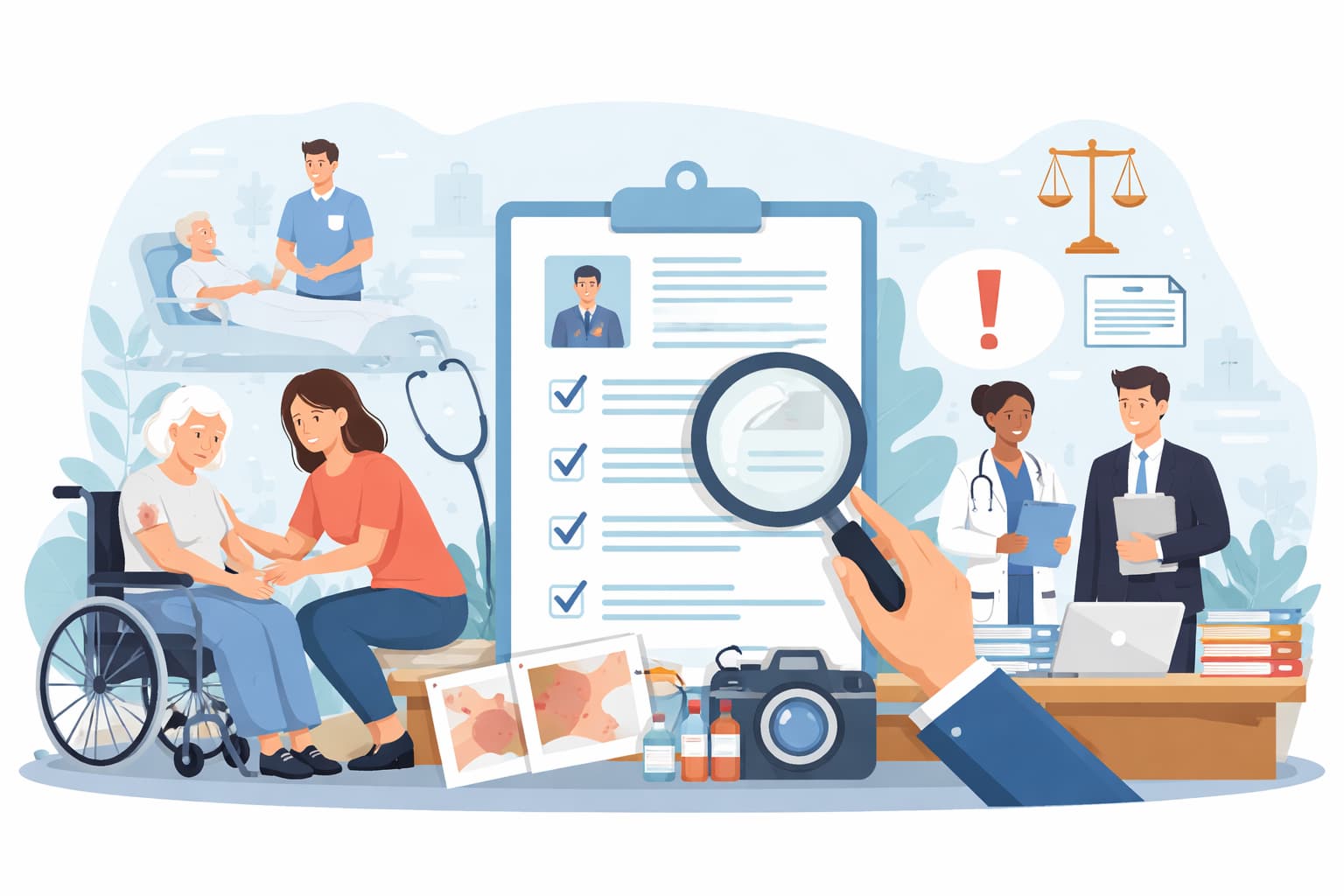
Before diving into the types of evidence you need, it’s important to understand the core legal principle at the heart of these cases: the “standard of care.” In simple terms, this is the minimum level of competent care and attention that a nursing home is legally obligated to provide its residents. It’s not about providing perfect care, but rather a level of care that a reasonably careful and skilled facility would offer in a similar situation.
In Massachusetts, this isn’t a vague idea; it’s reinforced by state law, which outlines specific rights for individuals in care facilities. These rights directly inform the standard of care and include the right to be free from injury and neglect and the right to receive quality care that meets their individual needs.
When a nursing home fails to meet this standard, it’s considered a “breach of duty.” This breach is the first major piece of the puzzle you need to solve to prove nursing home negligence.
What Are Common Signs of Nursing Home Negligence?
Negligence isn’t always obvious. It often appears as a pattern of smaller issues or a sudden, unexplained decline in a resident’s health. Being aware of the warning signs can help you identify a problem early. If you are visiting a loved one in a facility, whether it’s in the Back Bay of Boston or a quieter suburban town, keep an eye out for these red flags.
Some of the most common indicators of potential negligence include:
- Unexplained Injuries: Bruises, cuts, sprains, or broken bones without a clear and well-documented explanation from the staff.
- Bedsores (Pressure Ulcers): These sores develop when a person is left in one position for too long and are often a direct sign of inadequate movement and attention from caregivers.
- Malnutrition or Dehydration: Sudden weight loss, constant thirst, dry skin, or confusion can indicate that a resident is not receiving proper food and fluids.
- Poor Personal Hygiene: Unkempt appearance, dirty clothes or bedding, strong body odor, or signs of poor oral care can signal that basic daily needs are being ignored.
- Frequent Falls: While some falls are accidental, a pattern of falls can point to a lack of proper supervision, missing safety measures (like bed rails), or an unsafe environment.
- Changes in Emotional State: Sudden withdrawal, depression, anxiety, or fearfulness, especially around certain staff members, can be a symptom of neglect.
Noticing any one of these signs is a reason to ask questions and look more closely at the care your family member is receiving.
The Four Elements Needed to Prove Nursing Home Negligence
In any personal injury case, including those involving nursing home negligence, a successful claim must establish four specific legal elements. Think of these as the four legs of a table—if one is missing, the entire claim can collapse. A legal professional can help you connect your evidence to each of these points.
1. Duty of Care
First, you must show that the nursing home had a “duty of care” toward your loved one. This is usually the most straightforward element to prove. When a resident is admitted to a facility and payment is arranged, a formal relationship is established. This relationship creates a legal obligation for the facility and its staff to provide competent care, protect the resident from foreseeable harm, and meet their medical, physical, and emotional needs.
2. Breach of Duty
This is where the standard of care comes back into play. You must demonstrate that the nursing home “breached” or violated its duty of care. This means the facility or its employees acted—or failed to act—in a way that a reasonably prudent and competent nursing home would not have.
Examples of a breach of duty could include:
- Failing to turn a bedridden resident, leading to bedsores.
- Not providing adequate supervision for a resident at high risk of falling.
- Failing to provide sufficient food and water, causing dehydration.
This is the element where most of your evidence will be focused, as you are showing the specific actions that constituted negligence.
3. Causation
Next, you must prove “causation.” This means you have to draw a direct line from the nursing home’s breach of duty to your loved one’s injury. It’s not enough to show that the facility was careless and that your loved one was hurt. You must prove that the carelessness caused the harm.
For example, if a resident fell and broke their hip because a staff member left a wet floor unmarked and unsupervised, causation is clear. However, if a resident with a pre-existing medical condition suffered a health decline, it might be more challenging to prove that the facility’s actions, rather than the underlying condition, were the primary cause. This is often where medical records and professional opinions become critical.
4. Damages
Finally, you must show that the injury resulted in “damages.” This is a legal term for the real-world harm and losses your loved one experienced because of the negligence. Damages are not just about the injury itself but also the consequences that followed.
Damages in a nursing home negligence case can be categorized in a few ways:
- Economic Damages: These are the measurable financial losses, such as additional medical bills, the cost of therapy or rehabilitation, or the expense of moving to a new facility.
- Non-Economic Damages: These are the intangible losses that don’t have a specific price tag but are just as real. This includes pain and suffering, emotional distress, loss of enjoyment of life, and disability or disfigurement.
Proving all four of these elements is essential for holding a facility accountable for the harm they caused.
Gathering Critical Evidence to Prove Nursing Home Negligence

Strong evidence is the backbone of any successful claim. If you suspect negligence, documenting everything you can is one of the most powerful steps you can take. Your goal is to create a detailed, factual record of what happened.
Here are the key types of evidence that can help you prove nursing home negligence:
- Medical Records: A complete set of medical records is vital. This includes records from before, during, and after the suspected negligence occurred. These documents provide a medical timeline and can show a decline in health, detail a specific injury, and note a facility’s response (or lack thereof).
- Photographs and Videos: A picture truly is worth a thousand words. If possible, take clear, well-lit photos of any visible injuries like bruises, cuts, or bedsores. Also, photograph the conditions of your loved one’s room or the facility, such as safety hazards or unsanitary environments.
- Personal Notes and Journals: Keep a detailed log of your observations. Every time you visit or speak with your loved one, write down the date, time, and what you saw or heard. Note any complaints your loved one made, the names of staff members you spoke with, and the general conditions of the facility.
- Witness Statements: Other people may have seen what happened. This could include other residents, their family members who visit frequently, or even a compassionate staff member who is willing to speak up. Their accounts can provide an objective perspective that supports your claim.
- Facility Records: Nursing homes are required to keep detailed records, including incident reports, staffing schedules, and resident care plans. These documents can reveal critical information, such as whether the facility was understaffed on the day of an injury or if they failed to follow a resident’s prescribed care plan.
Gathering this information can feel like a big task, but each piece helps build a clearer picture of what truly happened to your family member.
The Role of Official Reports and State Agencies
You don’t have to investigate all on your own. In Massachusetts, there are official channels for reporting suspected neglect or nursing home injury, and using them can generate important evidence for your case.
The primary agency for this is the Massachusetts Department of Public Health (DPH). You have the right to file a formal complaint with the DPH if you believe a facility has provided substandard care or violated a resident’s rights. You can find specific information about how to file a complaint on the Massachusetts DPH website.
When you file a complaint, the DPH may launch an official investigation. This process can include:
- On-Site Inspections: Investigators may visit the facility, sometimes unannounced, to observe conditions firsthand.
- Record Reviews: They will review the facility’s internal records, including patient charts and staffing logs.
- Interviews: Investigators will likely speak with you, your loved one, facility management, and staff members.
If the DPH finds that the facility violated state or federal regulations, it will issue a formal report of its findings. This official report can serve as powerful, independent evidence that the facility breached its duty of care. Another valuable resource is the state’s Long-Term Care Ombudsman program, which advocates for residents’ rights and can help resolve issues.
Filing an official complaint not only helps your individual case but also helps protect other residents by bringing the facility’s failures to the attention of regulators.
How a Legal Professional Can Help Prove Your Case
Trying to piece together a negligence claim while also caring for an injured family member can be difficult. A personal injury attorney with experience in nursing home cases can take on the legal burdens so you can focus on your loved one.
A legal team can methodically build your case by:
- Conducting a Deep Investigation: Lawyers know what records to request and what questions to ask. They can use legal tools to obtain documents the facility might not willingly provide, such as internal communications or maintenance logs.
- Hiring Medical Professionals: To prove causation and damages, it’s often necessary to have a medical professional review the records. An attorney can work with doctors, nurses, and other specialists who can provide an opinion on whether the nursing home’s actions fell below the accepted medical standard of care.
- Interviewing Witnesses: A lawyer can formally interview witnesses and take sworn statements, preserving their testimony for your case.
- Calculating Damages: They can help you identify all the potential damages—both economic and non-economic—to ensure you are pursuing a fair valuation of the harm done.
- Handling All Communications: A lawyer will manage all interactions with the nursing home and its insurance company, protecting you from tactics they might use to minimize or deny your claim.
Working with a legal professional provides you with an advocate who understands the system and is dedicated to fighting for accountability.
Proving Nursing Home Negligence FAQs
Here are answers to some common questions about establishing negligence in a long-term care facility.
Is there a time limit to file a nursing home negligence claim in Massachusetts?
Yes, Massachusetts has a “statute of limitations,” which is a legal deadline for filing a lawsuit. For most personal injury claims, including nursing home negligence, the deadline is generally three years from the date of the injury or the date you reasonably should have discovered the injury. It is important to act promptly to protect your legal rights.
What if my loved one has dementia or Alzheimer’s and can’t explain what happened?
This is a very common situation. In these cases, evidence becomes even more critical. Unexplained physical injuries, reports from other witnesses, and a thorough review of medical records by a professional can often tell the story that your loved one cannot. A lack of testimony from the resident does not prevent you from bringing a claim.
What kind of compensation can be recovered in a nursing home negligence case?
Compensation, or damages, is intended to cover the losses resulting from the injury. This can include money for medical bills, rehabilitation costs, pain and suffering, emotional distress, and disability. The goal is to provide the financial resources needed to address the harm that was done.
Let Us Help You Seek Accountability
Discovering that a loved one has been harmed in a place you trusted to keep them safe can be heartbreaking and frustrating. You have a right to demand answers and hold the responsible parties accountable. The attorneys at Brooks Law Firm are committed to standing up for the rights of the injured and their families in Boston and across Massachusetts. We understand the challenges you are facing and are here to provide the support and guidance you need.
Our team offers legal services in English, Spanish, and Portuguese, and we are ready to listen to your story. Contact us today at (617) 245-8090 or through our online form for a free, no-obligation consultation to discuss your case and learn how we can help you fight for the justice your family deserves.