


Where Do Pedestrian Accidents Most Often Occur in Boston?
Walking through Boston offers a unique way to experience the city’s rich history and vibrant culture. However, for pedestrians, this can also come with risks. Motor vehicle collisions with pedestrians are not random; they often occur in predictable locations where factors like road design, driver behavior, and time of day create hazardous conditions.
Pedestrian accidents most often occur in Boston at busy intersections, on multi-lane roads in dense urban neighborhoods, and in areas with high concentrations of both foot and vehicle traffic. By examining data and identifying patterns, we can highlight the specific corridors and intersections that demand extra caution from both pedestrians and drivers.
If you’ve been injured in one of these high-risk areas, our Massachusetts pedestrian accident lawyer can review your case, explain your options, and fight for fair compensation—contact us today for a free consultation.
Key Takeaways about Where Pedestrian Accidents Most Often Happen in Boston, MA
- Pedestrian accidents in Boston are most common at intersections, particularly in densely populated neighborhoods like Dorchester, Roxbury, and the Downtown area.
- Major contributing factors include driver inattention, failure to yield the right-of-way to pedestrians, speeding, and poor visibility, especially at night.
- Data from city initiatives like Vision Zero helps identify high-crash corridors, such as Massachusetts Avenue and Blue Hill Avenue, as areas of significant concern.
- Certain vehicles, like large trucks and SUVs, present increased risks to pedestrians due to larger blind spots and greater impact force.
- Understanding state laws regarding pedestrian rights and driver responsibilities is important for anyone involved in an accident.
- Documenting details and seeking medical attention are important actions for an individual to take after being involved in a pedestrian incident.
Understanding the Landscape of Pedestrian Accidents in Boston
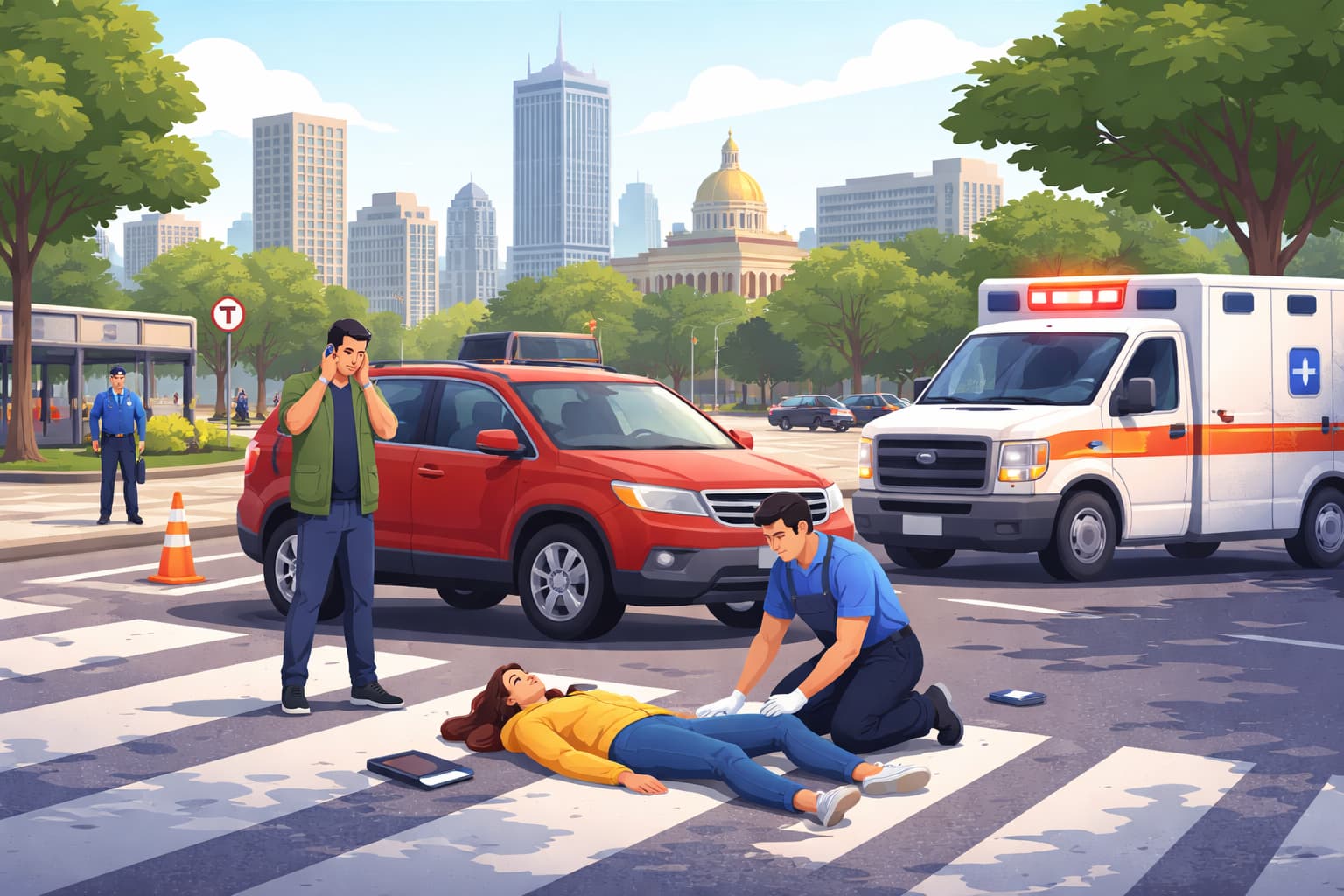
Boston is a city of walkers. With its historic, compact layout, many residents and visitors choose to travel on foot. Unfortunately, this high volume of foot traffic, combined with congested roadways, contributes to a significant number of pedestrian accidents each year. City-wide data helps pinpoint exactly where these incidents are most concentrated, revealing patterns that can inform public safety efforts and raise personal awareness.
According to reports from the City of Boston’s Vision Zero initiative, a program aimed at eliminating fatal and serious traffic crashes, a small number of streets account for a large percentage of severe incidents. This data shows that certain types of locations are consistently more dangerous for people on foot.
- Intersections: A majority of pedestrian accidents occur at intersections. This is where the paths of vehicles and pedestrians are most likely to cross, and confusion or a moment of inattention can have serious consequences.
- Arterial Roads: These are major, high-capacity urban roads. Streets like Massachusetts Avenue, Blue Hill Avenue, and Dorchester Avenue see a high volume of both fast-moving traffic and pedestrians, creating a high-risk environment.
- Areas Near Public Transit: The areas surrounding MBTA stations are natural hotspots for foot traffic. As people rush to and from trains and buses, they often cross busy streets, increasing the potential for accidents.
These findings make it clear that while an accident can happen anywhere, the risk is not evenly distributed across the city. Certain locations carry a much higher statistical probability of a pedestrian-vehicle collision.
High-Risk Locations for Pedestrians in Boston
By examining city data and local reports, we can identify specific areas where pedestrians should be especially cautious. These locations are often defined by heavy traffic, complex intersections, and a high density of people trying to get to work, home, or local businesses.
Dangerous Intersections and Corridors
Some of Boston’s intersections have gained a reputation for being particularly hazardous. The intersection of Massachusetts Avenue and Beacon Street, for example, is frequently cited as one of the most dangerous in the state due to its complex layout and heavy traffic flow. Other known high-incident corridors include:
- Massachusetts Avenue: This long and busy road cuts through multiple neighborhoods and has several high-crash intersections, particularly where it meets Columbus Avenue and Huntington Avenue.
- Blue Hill Avenue and Dorchester Avenue: These major thoroughfares in Dorchester and Mattapan are often highlighted in city safety reports for their high rates of pedestrian accidents.
- The Longwood Medical Area: With thousands of employees and patients traveling on foot between hospitals and clinics every day, the intersections around this area are a constant hub of activity and risk.
- North Washington Street: Especially near the Charlestown Bridge, this area funnels a tremendous amount of traffic and has been a focus for safety improvements due to the number of reported incidents.
Paying close attention in these specific corridors is vital for anyone traveling on foot, as they represent a disproportionate share of the city’s pedestrian safety challenges.
Areas with High Foot Traffic
It stands to reason that accidents are more likely where more people are walking. In Boston, this includes commercial districts, entertainment venues, and historic sites that draw large crowds.
- Downtown Crossing and the Financial District: The sheer volume of office workers, shoppers, and tourists creates a constant flow of pedestrians, making these streets a hotspot for incidents, especially during weekday rush hours.
- The North End and Faneuil Hall Marketplace: Known for their narrow streets and popular restaurants, these areas are filled with people on foot, often forcing them to walk close to vehicle traffic.
- Fenway/Kenmore: On game days or event nights at Fenway Park or the MGM Music Hall, the surrounding streets become flooded with thousands of pedestrians, creating a challenging environment for drivers.
These areas require a heightened sense of awareness from everyone, as the mix of distracted tourists, hurried commuters, and event crowds can lead to unpredictable situations.
What Factors Contribute to Pedestrian Accidents in Boston?
Identifying high-risk locations is only part of the story. Understanding why these accidents happen is equally important. The causes are often a combination of driver behavior, environmental conditions, and the physical design of the roadways themselves.
Driver Behavior and Distraction
The actions of a driver are the most common factor in pedestrian accidents. When a driver is not fully focused on the task of driving safely, pedestrians are the ones who are most vulnerable.
- Failure to Yield: According to Massachusetts laws, drivers are required to yield the right-of-way to a pedestrian in a marked crosswalk. A large number of accidents occur when drivers fail to follow this fundamental rule.
- Distracted Driving: Texting, talking on the phone, adjusting a GPS, or any other activity that takes a driver’s eyes or mind off the road can be disastrous. A driver looking down at a phone for just a few seconds can travel the length of a football field without seeing a pedestrian stepping into the street.
- Speeding: Driving above the speed limit, or simply too fast for the current conditions, dramatically reduces a driver’s ability to stop in time to avoid a collision. It also significantly increases the severity of a pedestrian’s injuries in the event of a crash.
These common driver errors are preventable, yet they continue to be leading causes of pedestrian injuries and fatalities in Boston and across the country.
Time of Day and Visibility
Environmental factors play a major role in pedestrian safety. National statistics from the National Highway Traffic Safety Administration (NHTSA) consistently show that pedestrian accidents are far more likely to occur at night.
In Boston, the risk is heightened during the evening rush hour, particularly in the fall and winter months when the sun sets earlier. Poor lighting on certain streets, dark clothing worn by pedestrians, and the glare of headlights can all make it difficult for drivers to see people on foot. Bad weather, such as rain, snow, or fog, further reduces visibility and increases stopping distances for vehicles, compounding the danger.
Infrastructure and Road Design
Sometimes, the design of the road itself can contribute to accidents. Boston’s mix of historic, narrow lanes and modern, multi-lane highways creates a complex environment. A lack of clearly marked crosswalks, short walk signal times, or confusing intersection layouts can put pedestrians in a difficult position.
The City of Boston’s Vision Zero program actively works to address these issues by redesigning dangerous intersections, adding protected bike lanes that also calm traffic, and improving street lighting. However, many areas still have infrastructure that prioritizes vehicle speed over pedestrian safety.
The Role of Different Vehicles in Boston Pedestrian Accidents
While any vehicle can be involved in a pedestrian accident, the type and size of the vehicle can have a huge impact on the outcome.
Passenger Cars and SUVs
The vast majority of pedestrian accidents involve standard passenger vehicles like sedans and SUVs. Due to their higher front-end profile, modern SUVs can cause more serious injuries than smaller cars in a collision with a pedestrian. The increasing popularity of these larger vehicles on city streets is a growing concern for pedestrian safety advocates.
Trucks, Buses, and Commercial Vehicles
Given Boston’s role as a commercial hub, the city sees a great deal of truck and bus traffic. These large vehicles pose a unique and elevated risk to pedestrians.
- Large Blind Spots: Commercial trucks have significant blind spots, often called “no-zones,” on all four sides. A pedestrian standing in one of these areas can be completely invisible to the driver.
- Wide Turns: Trucks and buses need much more space to make turns, especially on Boston’s tight corners. They may swing wide into adjacent lanes, potentially striking pedestrians waiting on the curb.
- Mass and Impact Force: The sheer size and weight of a commercial truck mean that any impact with a pedestrian is likely to result in catastrophic or fatal injuries.
The firm’s note about truck accidents highlights an important area of concern. Accidents involving these vehicles are often more complex due to the severity of the injuries and the commercial insurance policies involved.
Steps to Take After a Pedestrian Accident in Boston

If you have been involved in a pedestrian accident, focusing on your health and well-being is the top priority. But there are also practical steps you can take to protect your rights.
First, continue to follow all medical advice from your doctors. Attending follow-up appointments and physical therapy is essential for your recovery and for creating a complete medical record of your injuries.
Next, it is helpful to document everything you can remember about the incident.
- Write down the date, time, and location of the accident.
- Record your detailed recollection of what happened, from the moments leading up to the impact to what occurred immediately after.
- If you have the names and contact information of any witnesses, keep them in a safe place.
- Keep a file of all related documents, including the police report, medical bills, and any correspondence from insurance companies.
This documentation can be incredibly valuable later on. It is also important to understand the statute of limitations, which is the legal term for the deadline to file a lawsuit.
In Massachusetts, you generally have three years from the date of the accident to file a personal injury claim. While this may seem like a long time, investigating a case and preparing it properly takes time, so addressing the legal aspects sooner rather than later is often beneficial.
Boston Pedestrian Accident FAQs
Here are answers to some common questions that arise after a pedestrian accident in Boston.
What if the driver who hit me left the scene or was uninsured?
If you are injured in a hit-and-run or by a driver without insurance, you may still be able to receive compensation. Your own auto insurance policy, or that of a household family member, might include Uninsured/Underinsured Motorist (UM/UIM) coverage that can be used to cover your medical expenses and other losses.
Can I still have a case if I was partially at fault for the accident?
Massachusetts follows a “modified comparative negligence” rule. This means you can still recover damages as long as you are found to be 50% or less at fault for the accident. Your total compensation would then be reduced by your percentage of fault. For example, if you were found 10% at fault, your final award would be reduced by 10%.
What kind of compensation can be recovered in a pedestrian accident case?
A personal injury claim can seek compensation for a variety of losses, often called “damages.” This can include the costs of all past and future medical treatment, lost wages from being unable to work, pain and suffering, and compensation for any permanent scarring or disability resulting from the injuries.
Does it matter if I was not in a crosswalk when the accident happened?
While pedestrians have the clearest right-of-way in a marked crosswalk, drivers have a general duty to operate their vehicles safely and avoid collisions. Even if you were not in a crosswalk, a driver who was speeding, distracted, or otherwise acting carelessly could still be held responsible for the accident.
What should I do if the driver’s insurance company contacts me?
It is common for the at-fault driver’s insurance adjuster to call you soon after an accident. They may ask you to give a recorded statement or offer a quick settlement. It is often wise to be cautious in these conversations. You are not required to provide a recorded statement, and an early settlement offer may not fully account for the long-term costs of your injuries.
Contact a Boston Personal Injury Attorney
Being injured in a pedestrian accident can turn your life upside down, leaving you with physical pain, emotional distress, and financial burdens. At Brooks Law Firm, we are committed to helping injured individuals hold responsible parties accountable and pursue the compensation needed to rebuild. Our team has a long history of successfully representing clients in Boston and throughout Massachusetts.
We understand the challenges you may be facing and are prepared to handle every aspect of your case, from investigating the accident to communicating with insurance companies on your behalf. We offer legal support in English, Spanish, and Portuguese, ensuring you can communicate comfortably and clearly. If you have been injured, contact Brooks Law Firm today at (617) 245-8090 or through our online form for a free consultation with a Massachusetts personal injury lawyer to discuss your case and learn more about your legal options.


