


What Types of Compensation Can I Get for a Bus Accident?
If you have been injured in a bus accident, you may be able to receive payment for your medical bills, lost income, and the personal impact the crash has had on your life. The specific types of compensation available to those injured in a bus accident depend on the details of your injuries and the circumstances of the incident. Here is an overview of the different types of compensation for a bus accident.
Reach out to a personal injury lawyer who can protect your rights after a bus accident, handle insurers, and meet deadlines—contact us today for a free consultation.
Key Takeaways about Types of Compensation for a Bus Accident
- Individuals injured in a bus accident may be eligible for compensation covering both financial losses and personal suffering.
- Compensation is divided into economic damages (like medical bills and lost wages) and non-economic damages (like pain and suffering).
- Multiple parties could be held responsible, including the bus driver, the bus company (public or private), another driver, or a parts manufacturer.
- Claims against public entities, such as the MBTA in Boston, have specific rules and shorter deadlines under Massachusetts law.
- The total value of a claim is determined by factors like the severity of injuries, total financial costs, and the long-term effects on the person’s life.
Understanding the Types of Damages in a Massachusetts Bus Accident Claim

When you file a personal injury claim after a bus accident, the compensation you seek is legally referred to as “damages.” These damages are meant to put you back in the financial position you were in before the accident occurred. They are typically separated into two main categories: economic and non-economic damages.
Economic Damages: The Tangible Financial Losses
Economic damages are the straightforward, calculable costs you have incurred because of the accident. These are the expenses and losses that have a clear dollar amount attached to them. Keeping detailed records of these costs is crucial for building a strong claim.
Some of the most common economic damages include:
- Current and Future Medical Expenses: This includes everything from the initial emergency room visit and ambulance ride to surgeries, hospital stays, physical therapy, prescription medications, and any necessary medical equipment. If your injuries require long-term care, the estimated cost of that future treatment is also included.
- Lost Wages: If your injuries prevent you from working, you can seek compensation for the income you have lost. This is calculated based on your pay rate and the amount of time you were unable to work.
- Loss of Earning Capacity: In cases of severe, life-altering injuries, you might not be able to return to your previous job or may be unable to work at all. Compensation for loss of earning capacity addresses the income you would have earned over the course of your career had the accident not happened.
- Property Damage: If any of your personal belongings were damaged or destroyed in the crash, such as a laptop, phone, or clothing, you could be compensated for their repair or replacement cost.
- Other Out-of-Pocket Costs: This can include costs for transportation to medical appointments, necessary home modifications (like a wheelchair ramp), or hiring help for household chores you can no longer perform.
Carefully documenting these financial losses provides a clear foundation for the compensation you need to manage the financial side of your recovery.
Non-Economic Damages: The Intangible Impact on Your Life
Non-economic damages are more personal and subjective. They compensate you for the ways the bus accident has affected your quality of life, which don’t come with a specific price tag. While these losses are harder to quantify, they are an incredibly significant part of the harm you have experienced.
Examples of non-economic damages include:
- Pain and Suffering: This refers to the physical pain, discomfort, and general suffering caused by your injuries, both at the time of the accident and continuing into the future.
- Emotional Distress: A serious accident can cause significant emotional and psychological harm. This can include anxiety, depression, fear, sleep disturbances, and post-traumatic stress disorder (PTSD).
- Loss of Enjoyment of Life: Your injuries may prevent you from participating in hobbies, recreational activities, or social events that you once enjoyed. This compensation addresses that loss.
- Loss of Consortium: If your injuries are so severe that they negatively affect your relationship with your spouse, your spouse may have a claim for loss of consortium. This covers the loss of companionship, affection, and intimacy.
These damages acknowledge that the true cost of an accident goes far beyond just the medical bills and lost paychecks.
Who Can Be Held Responsible for a Bus Accident?
Determining who is at fault in a bus crash can be complex, as multiple parties could share responsibility. A thorough investigation is often needed to identify all the parties who contributed to the incident, whether it happened on a busy route in downtown Boston or a quieter suburban road.
Potential at-fault parties in a bus accident claim may include:
- The Bus Driver: If the driver was speeding, distracted, tired, or operating the bus under the influence, they could be held directly responsible.
- The Bus Company: A bus company, whether it’s a private charter service or a public entity like the Massachusetts Bay Transportation Authority (MBTA), has a duty to keep its passengers safe. They could be held liable for negligent hiring, poor driver training, or failing to properly maintain their vehicles.
- Another Motorist: Many bus accidents are caused by the driver of another car, truck, or motorcycle who was driving recklessly around the bus.
- The Bus Manufacturer: If the accident was caused by a defective part, such as faulty brakes or tires, the manufacturer of the bus or the specific part could be held accountable.
- A Government Entity: In some cases, a city or state agency may be responsible if the accident was caused by a poorly maintained road, broken traffic signals, or a dangerous intersection design.
Identifying every responsible party is a key step in ensuring you can seek the full compensation for a bus accident that you deserve.
The Unique Challenges of Bus Accident Claims
Pursuing a claim after a bus accident involves distinct challenges that are not always present in a standard car accident case. These complexities arise from the nature of common carriers (entities that transport the public), the number of people involved, and the laws governing them.
For instance, buses are often operated by government-affiliated agencies. In Massachusetts, if your accident involved an MBTA bus, your claim would be subject to the Massachusetts Tort Claims Act. This law has specific requirements, including a much shorter deadline to provide formal notice of your claim.
Other challenges include:
- Multiple Injured Parties: A single bus accident can injure dozens of people, leading to many claims being filed against the same company and its insurance policy.
- Complex Investigations: Determining the cause often requires examining driver logs, vehicle maintenance records, black box data, and company safety policies, which can be difficult to access.
- Powerful Opponents: Large transportation companies and government agencies have significant legal resources dedicated to defending against claims and minimizing what they have to pay.
Understanding these specific difficulties can help you prepare for the process ahead.
Steps to Take to Protect Your Right to Compensation
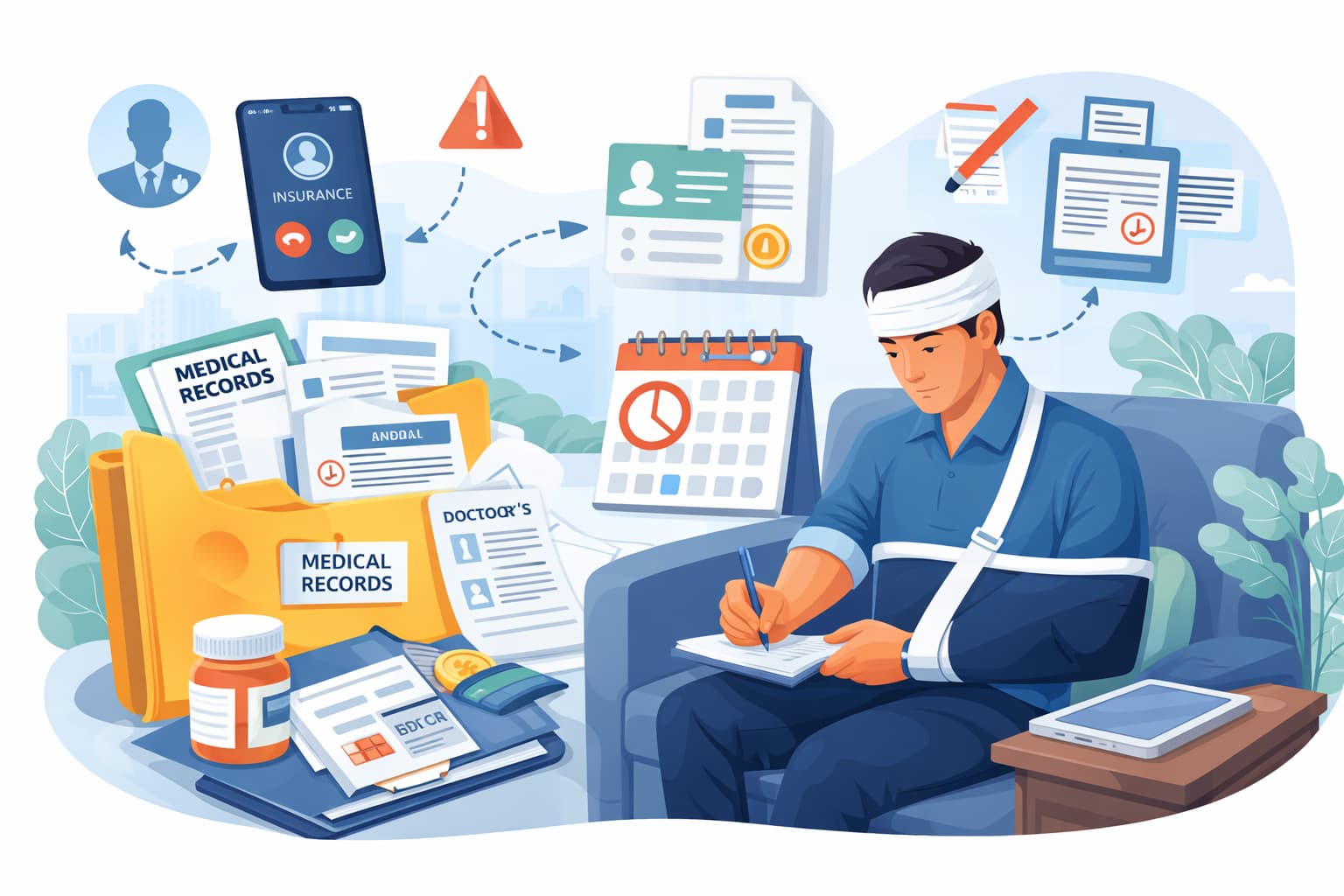
After you have received initial medical care and are recovering at home, there are several important steps you can take to protect your legal rights and support your future claim for compensation.
Document Everything You Can
Strong documentation is the backbone of any successful personal injury claim. Start keeping a file, either physical or digital, with all accident-related paperwork.
- Keep a Pain Journal: Each day, write down your pain levels, the physical limitations you are experiencing, and how your injuries are affecting your daily life. This can be powerful evidence of your pain and suffering.
- Track All Expenses: Save every bill, receipt, and invoice related to the accident. This includes medical co-pays, prescription costs, and even mileage for trips to the doctor.
- Organize Medical Records: Keep copies of your discharge papers, doctor’s notes, treatment plans, and any other medical documentation you receive.
This collection of evidence will help paint a clear picture of how the accident has impacted you physically, emotionally, and financially.
Be Cautious with Insurance Companies
Soon after the accident, you will likely be contacted by an insurance adjuster representing the bus company or another at-fault party. It is important to remember that their job is to protect their company’s financial interests.
- Avoid Giving a Recorded Statement: You are not required to provide a recorded statement to the other party’s insurance company. Adjusters can use your words out of context to challenge your claim later. It is wise to consult with an attorney before speaking with them.
- Do Not Sign Anything: Do not sign any medical authorizations or settlement offers without fully understanding what you are agreeing to. A premature settlement could prevent you from getting compensation for future medical needs.
- Stick to the Facts: If you do speak with an adjuster, provide only basic factual information. Do not guess about how the accident happened or downplay the extent of your injuries.
Proceeding with caution in these early conversations can prevent common pitfalls that might weaken your claim.
Understand Important Deadlines
In Massachusetts, there are strict time limits for filing a personal injury lawsuit, known as the statute of limitations. For most personal injury cases, the law gives you three years from the date of the accident to file a lawsuit.
However, if your claim is against a government entity like the MBTA, the deadline is much shorter. You must provide a formal written notice of your claim, known as “presentment,” to the correct agency within two years of the incident. Missing these deadlines can permanently bar you from receiving any compensation.
How is Compensation for a Bus Accident Calculated?
There is no simple calculator that can determine the exact value of a bus accident claim. The final amount of compensation is based on a combination of many unique factors. An attorney will carefully evaluate all aspects of your case to arrive at a fair valuation.
Key factors that influence the calculation include:
- The severity and permanence of your injuries.
- The total amount of your past and estimated future medical bills.
- The total amount of your lost income and its impact on your future earning potential.
- The strength of the evidence proving the other party’s fault.
- The extent of your physical pain and emotional distress.
- The impact of the injuries on your daily life and relationships.
Massachusetts also follows a modified comparative negligence rule. This means your compensation can be reduced by your percentage of fault. If you are found to be 51% or more at fault, you cannot recover any damages. This is why a clear investigation into liability is so important.
Bus Accident Compensation FAQs
Here are some answers to common questions about securing financial recovery after a bus crash.
What if the bus was a school bus?
Claims involving school buses can be especially complex. The responsible party could be the school district (a public entity), a private company contracted by the district, the driver, or another motorist. Claims against a public school district often fall under the same strict rules of the Massachusetts Tort Claims Act, requiring prompt notice.
Can I get compensation if I was a pedestrian or cyclist hit by a bus?
Yes. Pedestrians, cyclists, and occupants of other vehicles who are injured by a negligent bus driver or as a result of a poorly maintained bus have the same right to seek compensation as injured passengers. The types of damages available—economic and non-economic—are the same.
How long does it take to get compensation for a bus accident?
The timeline can vary greatly. A straightforward case with clear liability and minor injuries might be resolved in a few months. However, a complex case with severe injuries and disputed fault could take more than a year or longer, especially if it proceeds to a trial.
Do I have to go to court to get a settlement?
Most personal injury claims are settled out of court through negotiations between your attorney and the insurance company. A settlement can provide a faster resolution and avoid the uncertainty of a trial. However, if the insurance company refuses to offer a fair settlement, filing a lawsuit and being prepared to go to court may be necessary to obtain the compensation you deserve.
What if my own insurance covers some of my medical bills?
In Massachusetts, your own Personal Injury Protection (PIP) insurance may initially cover some of your medical bills and lost wages, regardless of who was at fault. However, PIP benefits are limited. A personal injury claim against the at-fault party is necessary to recover damages that exceed your PIP coverage, including pain and suffering.
Contact Our Boston Bus Accident Attorneys Today
Being injured in a bus accident can leave you with serious injuries and pressing financial concerns. Understanding your right to compensation is a critical step in your recovery process.
At Brooks Law Firm, we are dedicated to helping injured individuals hold responsible parties accountable. We have a long history of securing financial resources for our clients to help them rebuild their lives. Our team is ready to listen to your story, answer your questions, and discuss your legal options.
We provide legal support in English, Spanish, and Portuguese. Contact us today at (617) 245-8090 or through our online form for a free, no-obligation consultation to learn how we can assist you.


