

How Much Does It Cost To Become a US Citizen in 2026?
Becoming a United States citizen is one of the most significant steps a green card holder can take, and understanding how much it costs to become a US citizen is one of the first questions most people have before filing. The citizenship application fee has remained steady since April 2024, but a proposed federal rule could raise it significantly, which is one reason many eligible applicants are speaking with an immigration lawyer now rather than waiting. If you are wondering how long does it take to become a US citizen, what fees you will owe, or what to expect on the american citizenship test, a Citizenship & Naturalization Lawyer can walk you through every step. Call Brooks Law Firm today at (617) 245-8090 to get started.
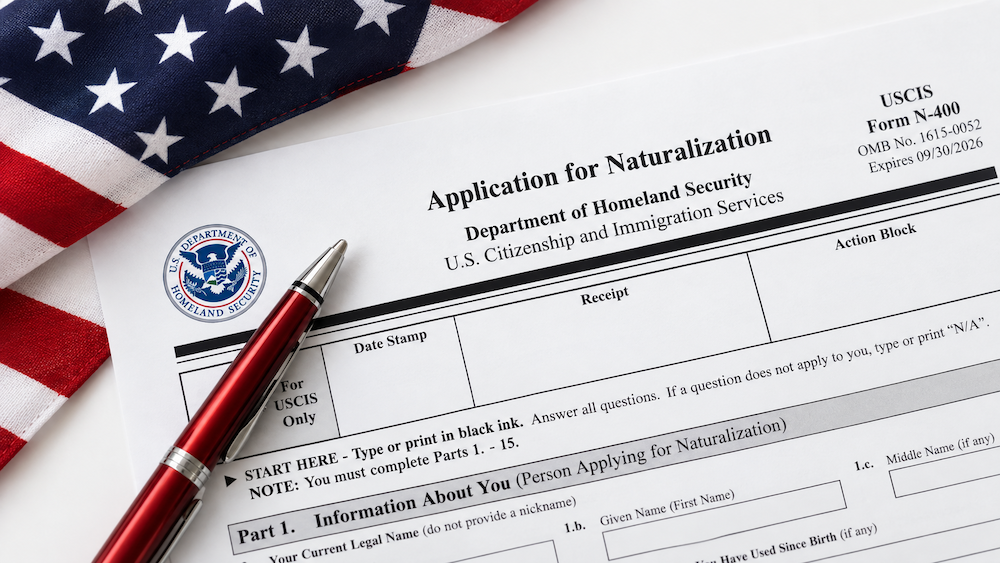
The main cost is the filing fee for Form N-400, the Application for Naturalization, which is the form that green card holders submit to U.S. Citizenship and Immigration Services (USCIS) when they are ready to apply for citizenship. Beyond the filing fee itself, there are a few other costs worth planning for, and whether you qualify for a reduced fee or a full waiver can make a meaningful difference.
The N-400 Filing Fee: What You Will Pay in 2026
As of October 2026, the government filing fee for Form N-400 is $710 if you file online or $760 if you file by paper. The $50 difference is an incentive USCIS built into the fee schedule to encourage electronic filing. Since April 2024, the biometrics fee (for fingerprints, photo, and background check) has been included in the filing fee, so there is no longer a separate charge for that appointment.
Here is the current fee structure:
- Online filing: $710
- Paper filing: $760
- Reduced fee: $380 (for applicants with household income between 150% and 400% of the Federal Poverty Guidelines)
- Fee waiver: $0 (for applicants who receive a means-tested benefit, whose household income is at or below 150% of the Federal Poverty Guidelines, or who can demonstrate financial hardship)
- Military applicants: $0 (current and former service members filing under military naturalization provisions are fee-exempt)
USCIS only accepts electronic payments for naturalization applications, even when filing by paper. You can pay through Pay.gov using a credit card, debit card, or bank account transfer. The full fee must be paid at the time of filing, as USCIS does not offer installment plans, and the fee is non-refundable even if your application is denied.
Can You Get a Reduced Fee or Fee Waiver?
Not everyone has to pay the full amount. USCIS offers two options for applicants who demonstrate financial need. Both the reduced fee and the fee waiver require a paper N-400 filing; they are not available when filing online.
Reduced fee of $380. If your household income falls between 150% and 400% of the Federal Poverty Guidelines, you may qualify for the reduced fee by including income documentation with your paper N-400. In 2026, the 150% threshold for a single-person household in the contiguous 48 states is approximately $23,940, and the 400% threshold is approximately $63,840.
Full fee waiver. You may qualify for a complete fee waiver by filing Form I-912 with your application if you meet any one of the following criteria:
- Your household income is at or below 150% of the Federal Poverty Guidelines
- You are currently receiving a means-tested benefit such as Medicaid (MassHealth in Massachusetts), SNAP, TANF, or SSI
- You can demonstrate financial hardship due to circumstances such as unexpected medical expenses, recent job loss, or other extraordinary costs
If approved, you pay nothing to USCIS.
A Proposed Fee Increase Could Change the Picture
In June 2026, the Department of Homeland Security published a proposed rule in the Federal Register that would significantly raise the N-400 filing fee. Under the proposal, the online fee would jump from $710 to $1,280, and the paper filing fee would rise from $760 to $1,330. The proposal would also eliminate the reduced fee option and remove fee waivers for naturalization applicants entirely.
As of October 2026, this proposed rule has not been finalized. DHS collected public comments through late August 2026 and is now reviewing them. The current fees remain in effect until a final rule is published, which means that for green card holders who are already eligible or approaching eligibility, filing at the current fee locks in the lower cost.
Other Costs to Plan For
The USCIS filing fee is the largest expense, but it is not the only one. Depending on your situation, you may also need to budget for:
- Document translations: If any of your supporting documents are in a language other than English, you will need certified translations. Professional translation services typically charge between $25 and $75 per page.
- Certified copies of records: Birth certificates, marriage certificates, divorce decrees, and court records may need to be officially certified. Costs vary by jurisdiction.
- Passport-style photos: Two photos meeting USCIS specifications are required. Most pharmacies and shipping stores charge between $10 and $20.
- Medical or court records: Some applicants need police clearance letters, court dispositions, or other records to address questions about good moral character. Obtaining these records may involve small fees.
- Attorney fees: While you are not required to hire a lawyer, working with an experienced naturalization attorney can help you avoid mistakes, prepare for the interview, and address any complications in your case. Attorney fees for naturalization cases typically range from $1,000 to $3,000, depending on the complexity of the case.
For most applicants, the total cost of becoming a US citizen in 2026 falls somewhere between $710 (if filing online with no additional expenses) and roughly $2,000 to $4,000 when attorney fees, translations, and miscellaneous costs are included.
Benefits of Being a US Citizen
Understanding the cost is important, but it is equally important to understand what you gain. The benefits of being a US citizen go well beyond a new document.
Protection from deportation. Unlike lawful permanent residents, US citizens cannot be placed in removal proceedings based on their immigration status. Citizenship provides the most secure immigration status available under US law, and in a climate of increased enforcement, that security carries real weight.
The right to vote. Only US citizens can vote in federal elections. Voting is one of the most direct ways to participate in the decisions that shape your community and your family’s future. Green card holders who register to vote or cast a ballot, even by mistake, face serious immigration consequences, including potential removal and a permanent bar on future naturalization. If you want to participate fully in the democratic process, citizenship is the only lawful path.
Related: Can Green Card Holders Vote Locally? 2026 Rules
Broader family sponsorship. US citizens can petition for a wider range of family members than green card holders can, including parents, married children, and siblings. In many categories, family petitions filed by citizens also move faster through the visa backlog than those filed by permanent residents.
Related: Petitions and Visas for Parents: Your Green Card Filing Guide
A US passport. A United States passport grants visa-free or visa-on-arrival access to over 180 countries, making international travel significantly easier.
No more green card renewals. Green cards must be renewed every 10 years (or conditions must be removed after two years for conditional residents). Once you naturalize, you never need to worry about maintaining or renewing your immigration status again.
What Can Citizens Do That Green Card Holders Cannot?
While green card holders enjoy many rights in the United States, citizenship opens doors that permanent residence alone does not. Here is a practical comparison:
- Vote in all elections. Citizens can vote in federal, state, and most local elections. Green card holders cannot.
- Run for public office. Most elected positions at the state and local level, and all seats in Congress, require US citizenship.
- Access federal jobs. Many federal government positions, particularly those requiring security clearances, are restricted to US citizens. These jobs often come with strong benefits, including health insurance and retirement plans.
- Qualify for full federal financial aid. US citizens are eligible for the complete range of federal student financial aid through FAFSA, including Pell Grants and subsidized loans. Some scholarships are also exclusively available to citizens.
- Pass citizenship to your children. Children born abroad to US citizens may automatically acquire citizenship under certain conditions, which provides long-term security for your family.
- Travel without risking your status. Lawful permanent residents who spend extended periods outside the United States risk abandoning their green card. Citizens face no such restriction.
Related: How to Get a Green Card Through Marriage to a US Citizen in 2026
How Difficult Is It To Become a US Citizen?
The naturalization process is not simple, but it is also not out of reach for most eligible green card holders. The difficulty depends on your individual circumstances, particularly your immigration history, your comfort with English, and whether anything in your background could raise a good moral character concern.
Eligibility Requirements
To apply for naturalization, you must generally meet the following requirements:
- Be at least 18 years old at the time of filing
- Be a lawful permanent resident for at least 5 years (or 3 years if you obtained your green card through marriage to a US citizen and are still married and living together)
- Have maintained continuous residence in the United States for the required period
- Have been physically present in the United States for at least 30 months out of the five years before filing (or 18 months under the three-year rule)
- Have lived in the state or USCIS district where you are filing for at least 3 months
- Demonstrate good moral character
- Pass an English language test (reading, writing, and speaking)
- Pass a US civics test covering American history and government
- Be willing to take the Oath of Allegiance
You can file your N-400 up to 90 days before you meet the residency requirement, which means you do not have to wait until the exact five-year or three-year anniversary of receiving your green card.
The English and Civics Tests
The naturalization interview includes an English proficiency test and a civics knowledge test. The English test covers basic reading, writing, and speaking ability. The civics test asks questions about US government structure, history, and civic principles. USCIS provides study materials to help applicants prepare.
Some applicants are exempt from the English test based on age and years of permanent residence. If you are 50 or older and have been a green card holder for at least 20 years, or 55 or older with at least 15 years of permanent residence, you may take the civics test in the language of your choice.
Processing Times
As of 2026, USCIS processing times for Form N-400 vary significantly depending on which field office handles your case. The national average sits around 7 to 8 months, but the actual range runs from roughly 6 to 18 months from filing to oath ceremony, with some offices moving considerably faster or slower. You can check the current estimate for your specific field office at uscis.gov/processing-times.
Common Complications
The areas that most frequently create difficulty for applicants include:
- Extended travel abroad. Trips outside the United States lasting more than six months can break your continuous residence and delay or reset the clock on your eligibility.
- Criminal history. Certain offenses create temporary or permanent bars to naturalization. Even arrests that did not lead to a conviction can raise questions during the interview.
- Tax issues. USCIS may review whether you have filed all required federal and state tax returns during the statutory period.
- Prior immigration violations. If you worked without authorization or fell out of status at any point before receiving your green card, those issues can sometimes resurface during the naturalization process.
An experienced attorney can help you identify potential issues before you file, which is often easier and less costly than trying to resolve them after USCIS flags them during the interview.
Related: Green Card After Asylum: How It Works
Talk to Brooks Law Firm About Your Path to Citizenship
Every naturalization case is different. Whether you are trying to determine your eligibility, figure out whether you qualify for a reduced fee, or address something in your history that concerns you, the right time to get answers is before you file, not after.
Reach out to Brooks Law Firm today to schedule a consultation, and we will give you an honest look at where you stand. Call (617) 245-8090 or visit brookslawfirm.com/contact-us to get started.


