


What Are the Elements of a Product Liability Claim?
When you buy a product, you have a right to expect that it will be safe to use as intended. Unfortunately, this is not always the case. A defective product can cause serious harm, leaving you with injuries, medical bills, and uncertainty about the future. The core elements of a product liability claim involve proving that you were injured by a product that was defective, and that the defect directly caused your injury. If you can prove these key components in your case, you have grounds to hold the manufacturer or seller accountable for the harm they’ve caused.
If you have been hurt by an unsafe product in the Boston area, it’s important to understand your rights and the legal pathways available to you. While the process can seem complex, it is built on a clear foundation of consumer protection.
Reach out to a trusted personal injury lawyer to protect your rights and pursue compensation in a product liability claim.
Key Takeaways about the Elements of a Product Liability Claim
- A product liability claim allows an injured person to seek compensation from the manufacturer or seller of a defective product.
- The essential elements of a product liability claim are an injury or loss, a product defect, and a causal link between the two.
- Product defects fall into three main categories: manufacturing defects, design defects, and marketing defects (also known as failure to warn).
- In Massachusetts, these claims can proceed under legal theories such as strict liability, negligence, or breach of warranty.
- Preserving the defective product, documenting injuries, and keeping all related paperwork are critical actions after an incident.
Understanding the Foundation: What is a Product Liability Claim?
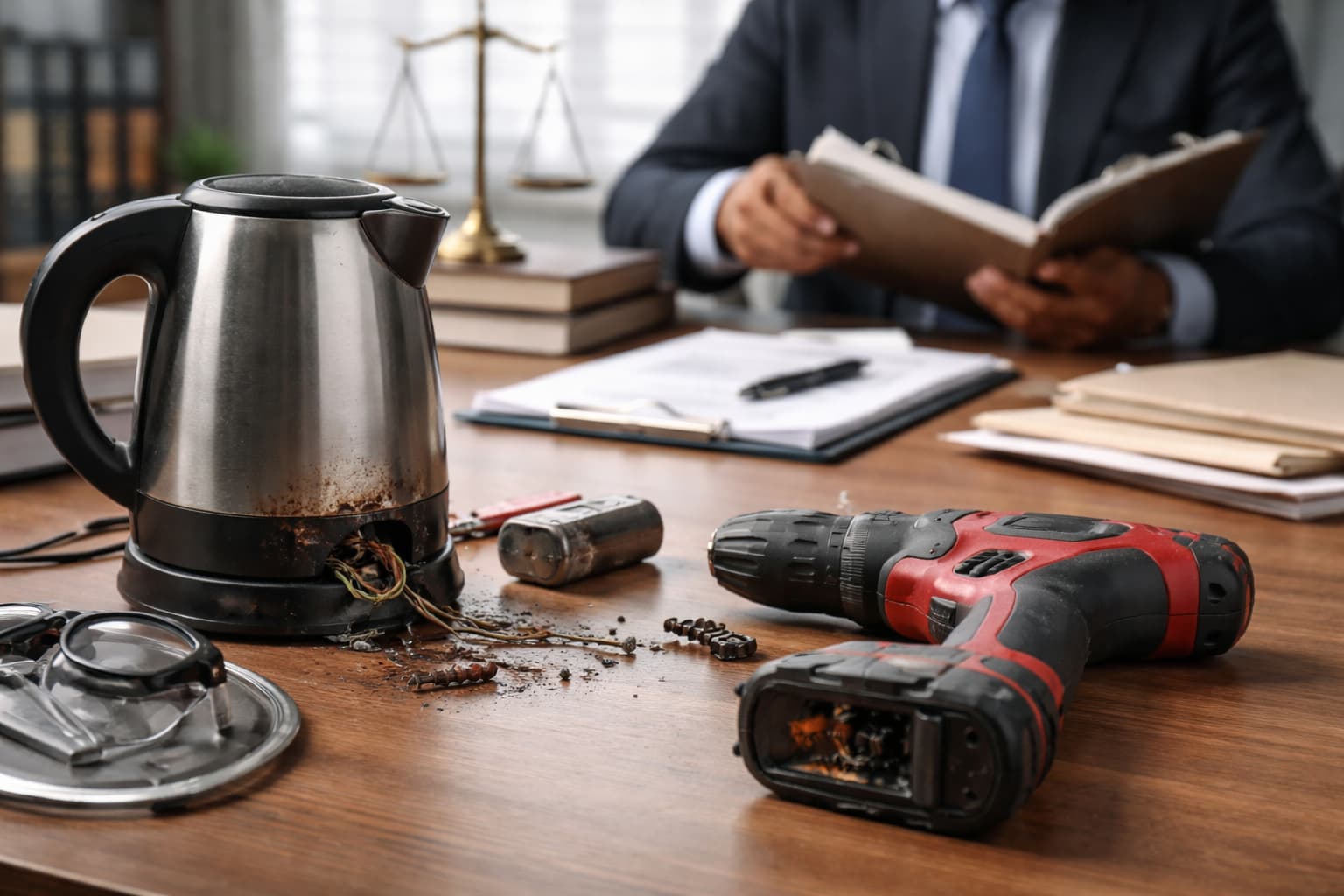
At its heart, a product liability claim is a way to seek justice when a consumer product causes harm. This area of law is based on the principle that the companies that create, distribute, and sell products have a responsibility to ensure those items are reasonably safe for public use. When they fail in this duty, they can be held financially responsible for the injuries that result.
This isn’t limited to complicated machinery or electronics. A valid claim can arise from almost any product you can think of, from a kitchen appliance that malfunctions and causes a burn to a child’s toy with a dangerous, hidden part. Whether it’s a defective car part leading to a collision on the Southeast Expressway or a contaminated food product purchased at a local Boston market, if a product is unsafe and causes injury, a product liability claim may be the appropriate path to securing compensation.
The Core Elements of a Product Liability Claim in Massachusetts
To successfully bring a product liability claim in Massachusetts, your case must establish several key facts. Think of these as the building blocks of your claim; without each one, the structure is incomplete. A legal professional can help you gather the evidence needed to support each element.
Element 1: You Suffered an Injury or Loss
The first and most straightforward element is demonstrating that you suffered a genuine injury or monetary loss. It isn’t enough for a product to simply be broken or potentially dangerous. There must be actual harm.
This harm can take many forms, and it’s important to document all of them. These losses can include:
- Physical Injuries: This includes everything from cuts and burns to broken bones, organ damage, or long-term illness.
- Medical Expenses: All costs associated with treating your injuries, such as hospital stays, doctor visits, prescription medication, and physical therapy.
- Lost Wages: If your injury prevents you from working, you can claim the income you lost during your recovery. If the injury affects your ability to work in the future, you may also be able to claim loss of earning capacity.
- Property Damage: Sometimes a defective product damages other property. For example, a faulty washing machine might flood your home, or a defective battery might start a fire.
Documenting these losses with medical records, bills, and pay stubs is a fundamental part of building your case.
Element 2: The Product is Defective
Next, you must prove that the product that injured you was defective. This means there was something wrong with it that made it unreasonably dangerous. In the legal world, defects are generally sorted into three distinct categories.
- Manufacturing Defects: This type of defect occurs during the production process. The product’s design may be perfectly safe, but an error in making it turned one specific item (or a batch of items) into a hazard. It’s a deviation from the intended design. For example, if a bicycle was designed with strong bolts, but one bike left the factory with a cracked bolt that later fails, that is a manufacturing defect.
- Design Defects: A design defect is a flaw in the product’s original blueprint. In this case, the entire product line is inherently dangerous, even if each item is manufactured perfectly according to that design. An example would be a coffee maker designed in such a way that it can easily tip over and spill scalding liquid during normal use, or a power tool made without a necessary safety guard.
- Marketing Defects (Failure to Warn): This defect relates to how the product is presented to the public. It occurs when a product is sold without adequate instructions for its safe use or without clear warnings about non-obvious dangers. For instance, if a powerful cleaning chemical doesn’t include a warning that it should only be used in a well-ventilated area, that could be a marketing defect.
Identifying the specific type of defect is a crucial step in determining the best legal strategy for your claim.
Element 3: The Defect Caused Your Injury
This element, known as causation, connects the defect to your injury. You must be able to show a direct link—that the product’s defect was the actual and proximate cause of the harm you suffered. It’s not enough that you were injured while using a defective product; the defect itself must have been the reason for the injury.
For example, if you were in a car accident because your new car’s brakes failed, you can draw a clear line from the brake defect to the collision and your injuries. However, if the brakes were defective but the accident was caused by another driver running a red light, establishing causation for a product liability claim would be much more difficult.
Element 4: You Were Using the Product as Intended
Finally, your claim must show that you were using the product in a way the manufacturer could have reasonably expected. This doesn’t mean you have to follow the instruction manual to the letter. The law considers any “reasonably foreseeable” use of a product.
For instance, a manufacturer should foresee that a person might stand on a kitchen chair to reach a high shelf, even though that is not its primary function. If the chair is so poorly made that it collapses under a person’s weight, a claim could still be valid. However, if you were using a lawnmower to trim your hedges and were injured, a manufacturer would likely argue that this was an unforeseeable misuse of their product.
Legal Theories Behind a Product Liability Claim
Once the core elements are present, a claim can be brought forward based on one or more legal theories. These theories are the legal arguments that frame how and why a company is responsible.
Strict Liability
Strict liability is a powerful legal concept for consumers. Under this theory, you do not have to prove that the manufacturer was careless or negligent. If you can prove that the product was defective when it left the manufacturer’s control and that the defect caused your injury, the manufacturer is liable. The focus is entirely on the product’s condition, not the company’s behavior.
Negligence
A claim based on negligence argues that the company failed to exercise reasonable care in the design, manufacturing, or sale of the product. This means you must show that the company did something a reasonably careful company would not do (or failed to do something they should have done).
Examples of negligence in product liability can include:
- Failing to conduct proper safety testing on a product before it goes to market.
- Using substandard materials to cut costs, knowing it could create a hazard.
- Failing to issue a timely recall after discovering a product is dangerous.
Proving negligence requires more evidence than a strict liability claim because it focuses on the company’s actions and decisions.
Breach of Warranty
A warranty is essentially a promise made by a seller to a buyer about the quality or performance of a product. When a product fails to live up to this promise and causes injury, a claim for breach of warranty may be possible. In Massachusetts, consumer protection laws provide strong support for these claims.
-
- Implied Warranty: The law automatically implies certain promises in every sale. The most common is the “implied warranty of merchantability,” which guarantees a product is fit for its ordinary purpose. For example, a blender should blend, and a heater should heat safely. If it fails in its basic function and causes harm, the implied warranty has been breached.
- Express Warranty: This is a specific promise made by the manufacturer or seller, either verbally or in writing. It could be a statement in an advertisement, on the packaging, or in the owner’s manual (e.g., “shatterproof glass” or “safe for children”). If that promise is broken and you are injured as a result, you may have a claim for breach of an express warranty.
These legal theories provide different avenues for holding companies accountable for the harm their products cause.
Steps to Take if You’ve Been Injured by a Defective Product
If you are home and recovering after being harmed by a product, the steps you take can be very important for any future legal action. Taking a moment to secure key evidence can make a significant difference.
- Preserve the Product: This is perhaps the most critical step. Do not throw the product away, attempt to fix it, or send it back to the manufacturer. The product itself is the single most important piece of evidence in your claim. Store it in a safe place where it won’t be altered or damaged further.
- Document Everything: Use your phone to take pictures and videos from every angle. Capture photos of the defect itself, any warning labels (or lack thereof), and the area where the injury occurred. Also, take clear photos of your injuries as they progress.
- Gather All Related Items: Keep the original packaging, the user manual or instructions, the receipt or proof of purchase, and any other documents that came with the product.
- Keep Detailed Medical Records: Continue with all recommended medical treatment. Keep a file of all your medical appointments, reports from doctors, and bills. This helps to establish the extent of your injuries and the financial cost associated with them.
These actions will help you and your legal representative build a well-supported claim.
Who Can Be Held Responsible in a Product Liability Case?

Identifying the responsible party can sometimes be more complicated than just pointing to the company whose name is on the box. Liability can extend to any party in the “chain of distribution”—the path the product takes from creation to consumer.
Potentially responsible parties include:
- The Product Manufacturer: The company that designed and built the final product.
- A Component Part Manufacturer: If a specific part of the product was defective (like a faulty airbag in a car), the maker of that part could be liable.
- The Wholesaler or Distributor: The “middleman” who moves the product from the factory to the retail stores.
- The Retailer: The store that sold the product directly to you.
It is possible for more than one of these parties to be held responsible for your injuries. An investigation can determine which entities played a role in putting the dangerous product in your hands. This is why working with a legal team that can manage the complexities of these cases is so beneficial.
Elements in a Product Liability Claim FAQs
Here are answers to some common questions people have about injuries from defective products.
What is the statute of limitations for a product liability claim in Massachusetts?
In Massachusetts, you generally have three years from the date of the injury to file a product liability lawsuit. There are some exceptions, so it is important to understand the specific deadline that applies to your situation.
What if I was injured by a used product I bought?
Filing a claim for an injury caused by a used product can be more challenging, but it is not impossible. Liability may depend on who sold you the product (e.g., a commercial seller of used goods versus a private individual) and whether the defect existed when the product was originally manufactured.
Can I still file a claim if the product was recalled?
Yes. A recall notice from a body like the Consumer Product Safety Commission (CPSC) can actually be strong evidence that the product was defective. The fact that a recall was issued does not automatically prevent you from seeking compensation for injuries that occurred before or even after the recall was announced.
How much does it cost to hire a lawyer for a product liability case?
Many personal injury law firms handle product liability cases on a contingency fee basis. This means you do not pay any attorney’s fees upfront. The firm is paid a percentage of the compensation they recover for you, and if they do not win your case, you do not owe them a fee.
A Boston Law Firm Ready to Uphold Your Rights
Being injured by a product you trusted can leave you feeling let down and uncertain about what to do next. The physical recovery, medical bills, and lost time from work can create a difficult period for you and your family. At Brooks Law Firm, we believe that you should not have to carry this burden alone. Our team is committed to holding negligent companies accountable and fighting for the resources you need to move forward.
If you or a loved one has been harmed by a defective product in Massachusetts, we are here to help you understand your legal options. We provide legal support in English, Spanish, and Portuguese. Contact us today at (617) 245-8090 or through our online form for a free, no-obligation consultation to discuss your case and learn how we can assist you.


