

Is ICE Detaining People During Their Green Card Interviews?
If you or your spouse have a green card interview coming up, the reports about ICE detaining people during their green card interviews are real, and the fear you may be feeling is completely understandable. Before you skip your appointment or try to navigate this alone, call Brooks Law Firm at (617) 245-8090 for a free consultation. An experienced immigration lawyer can review your case beforehand and help you understand whether you may be at risk, so you walk into that interview prepared, not blindsided.
Since November 2025, immigration attorneys across the country have confirmed what once seemed unthinkable: ICE agents are detaining applicants during or immediately after routine adjustment-of-status interviews at USCIS field offices. The practice, which represents a dramatic break from decades of agency norms, has affected spouses of U.S. citizens who followed every step of the legal process, many of whom had no criminal history at all. If you are preparing for a marriage-based green card interview in Massachusetts or anywhere else, understanding what is happening and how to protect yourself has never been more important.
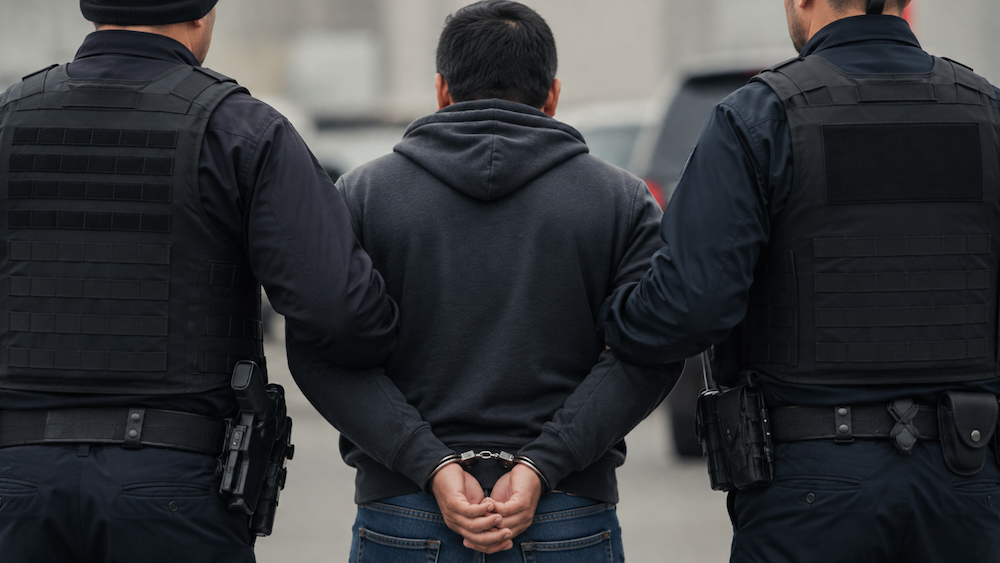
ICE Is Detaining Green Card Applicants at Interviews at USCIS Offices
The first documented cases emerged from the San Diego USCIS field office in mid-November 2025. According to multiple news reports and attorney accounts, ICE agents detained applicants immediately after their marriage-based green card interviews concluded. In some instances, applicants described their interview proceeding entirely normally, with the USCIS officer indicating everything looked good, only for ICE agents to enter the room moments later and place the applicant in handcuffs.
In nearly every reported case, the person detained had no criminal record. Their only immigration violation was a visa overstay, something that, for spouses of U.S. citizens, Congress specifically addressed when it made immediate relatives eligible for adjustment of status even if they had fallen out of lawful status. Under INA § 245, a spouse of a U.S. citizen may apply for a green card from within the United States, and overstaying a visa does not automatically bar that process, provided the person was inspected and admitted or paroled when they entered the country.
Within weeks, similar arrests were confirmed in Cleveland, New York City, and Utah. Court filings and investigative reporting revealed that USCIS had, in some cases, coordinated with ICE by alerting the enforcement agency when certain applicants scheduled in-person interviews.
ICE Is Arresting U.S. Citizens’ Spouses at Green Card Interviews
What has made these detentions so alarming is who they are targeting: the spouses of American citizens in marriages that USCIS itself often found to be genuine.
Among the people detained were a British mother arrested while holding her four-month-old infant, the wife of a retired Marine Corps staff sergeant, a Ukrainian refugee, and a German man just days before his first wedding anniversary. In one widely reported San Diego case, a U.S. citizen who works for the county sheriff’s department watched ICE agents handcuff his wife and take her to a detention center, forcing him to take leave from work to care for their baby.
For the U.S. citizen spouse, the experience is devastating. They did what the law asked, filed the petition, gathered the evidence, attended the interview, and still watched their husband or wife taken away. After an arrest, the detained person is processed through the immigration detention system. The citizen spouse is typically left to track their family member through ICE’s detainee locator system and figure out how to secure a bond hearing or legal representation from the outside.
This practice is not entirely new. A class-action lawsuit, Sanchez v. Noem, was filed by the ACLU of Maryland on behalf of families who experienced the same treatment as far back as 2018, when a Maryland father of three was seized in handcuffs during a routine marriage interview and deported to China, despite USCIS having confirmed the validity of his 14-year marriage to a U.S. citizen. A federal district court in Maryland granted an injunction in 2024 barring ICE from arresting, detaining, or removing class members during these interviews. In January 2026, the Fourth Circuit Court of Appeals heard oral arguments after the government appealed to have the injunction lifted. As of this writing, the appeal remains pending, and a ruling could shape enforcement norms across the Fourth Circuit and potentially influence how ICE operates at interview sites nationwide.
Why Is ICE Arresting People at Green Card Interviews?
ICE has stated publicly that all individuals who are unlawfully present in the United States may be subject to arrest and detention, and that a lack of criminal history is not a prerequisite for enforcement. The agency’s position is that being in the country without valid immigration status is itself a federal violation that justifies action.
But the legal picture is more complicated than that framing suggests. For decades, immigration practitioners understood that USCIS field offices functioned as a space where people could pursue the legal pathways Congress created without fear of enforcement. The adjustment-of-status process was designed precisely for people who may have overstayed a visa or fallen out of status: it allows them to regularize their situation from within the United States, provided they meet the statutory requirements. Arresting someone who shows up for their interview turns the legal process itself into an enforcement tool, which is exactly the argument the ACLU and other advocates have made in federal court.
The shift also raises a practical concern beyond the courtroom. If applicants believe they will be detained at their interview, some may stop attending altogether. Missing a USCIS interview can result in a case denial, a referral to immigration court, or the loss of legal protections that were available before the applicant failed to appear. In effect, the fear of arrest can push people out of the legal system entirely, which helps no one.
What This Means for Families in Massachusetts
Massachusetts has been at the center of the broader immigration enforcement debate.
Data obtained through public records requests shows that from January 2025 through early 2026, ICE made over 7,000 arrests in the state, and nearly half of those detained had no criminal record. Governor Healey demanded full transparency from ICE in March 2026, and the state legislature has advanced the PROTECT Act through both chambers.
As of late July 2026, a conference committee reported out a reconciled version of the bill, but it has not yet been signed into law. If enacted, the PROTECT Act would bar warrantless civil immigration arrests at state courthouses, schools, childcare centers, and healthcare facilities, and it would limit state and local law enforcement cooperation with ICE.
Separately, a federal judge in June 2026 vacated Trump administration policies that had allowed ICE broad discretion to arrest people at courthouses, reinstating narrower prior guidance. That ruling specifically affects the ICE Boston-area field office in Burlington.
These legal developments are encouraging, but they remain subject to appeal and do not specifically address arrests at USCIS offices during green card interviews. The enforcement landscape continues to shift, and while these types of interview arrests have not yet been reported in New England, that does not mean they cannot happen here in the future.
What You Should Do Before Your Green Card Interview
If you have a green card interview scheduled, do not skip it. Missing the appointment can damage your case in ways that are very difficult to undo. But you also should not walk in unprepared.
An attorney can review your immigration history before the interview and assess whether there are any factors, such as a prior removal order, an outstanding warrant, or an unresolved status issue, that may increase the risk of enforcement action. An attorney can accompany you to the interview, document what happens, and intervene if necessary. If an arrest does occur, having counsel already on your case means the fight for your release can begin immediately rather than days later.
Couples should also prepare for the possibility of detention. That means knowing where your critical documents are, having a plan for children and dependents, understanding how to locate a detained family member through ICE’s online detainee locator, and knowing that the detained person has the right to remain silent and should not sign anything or make statements without an attorney present.
Couples should also prepare for the possibility of detention. Based on our experience, we can advise whether detention is a serious risk in your situation and help you have a plan in place before the interview. That means:
- Knowing where your critical documents are.
- Having a plan for children and dependents.
- Understanding how to locate a detained family member through ICE’s online detainee locator.
- Knowing that the detained person has the right to remain silent and should not sign anything or make statements without an attorney present.
If you’re pursuing a green card through a path other than marriage, see our guide on how to get a green card in the USA without marriage.
Reach out to Brooks Law Firm today at (617) 245-8090 to schedule a free consultation. We can review your case, identify potential risks, and make sure you walk into your interview with a clear understanding of where you stand, so that your path to a green card stays on track.


