


How Do You Get What You Deserve in a Semi Truck Accident Settlement?
Securing a fair semi-truck accident settlement involves a detailed process of proving who was at fault, carefully documenting all your losses, and effectively communicating the full impact the crash has had on your life.
Unlike a typical car accident, a collision with a commercial truck involves complex state and federal regulations, powerful corporate interests, and potentially catastrophic injuries, all of which can affect the final compensation amount.
Understanding these unique factors is the first step toward getting the resources you need to recover.
If you’re facing the challenges of a semi-truck crash, reach out to an experienced truck accident lawyer today to protect your rights and pursue the full settlement you deserve.
Key Takeaways about Getting What You Deserve in a Semi-Truck Accident Settlement
- A semi-truck accident settlement calculation includes both financial costs, such as medical bills, and non-financial impacts, including pain and suffering.
- Determining who is legally responsible can be complicated, as liability may fall on the driver, the trucking company, a parts manufacturer, or a maintenance provider.
- Federal regulations for the trucking industry, established by the Federal Motor Carrier Safety Administration (FMCSA), play a crucial role in these cases.
- The insurance companies representing trucking businesses often employ aggressive tactics to reduce the amount they have to pay out on a claim.
- Evidence like the truck’s “black box” data, driver logs, and company maintenance records is vital for building a strong case for fair compensation.
Understanding the Unique Factors in a Boston Truck Accident Claim
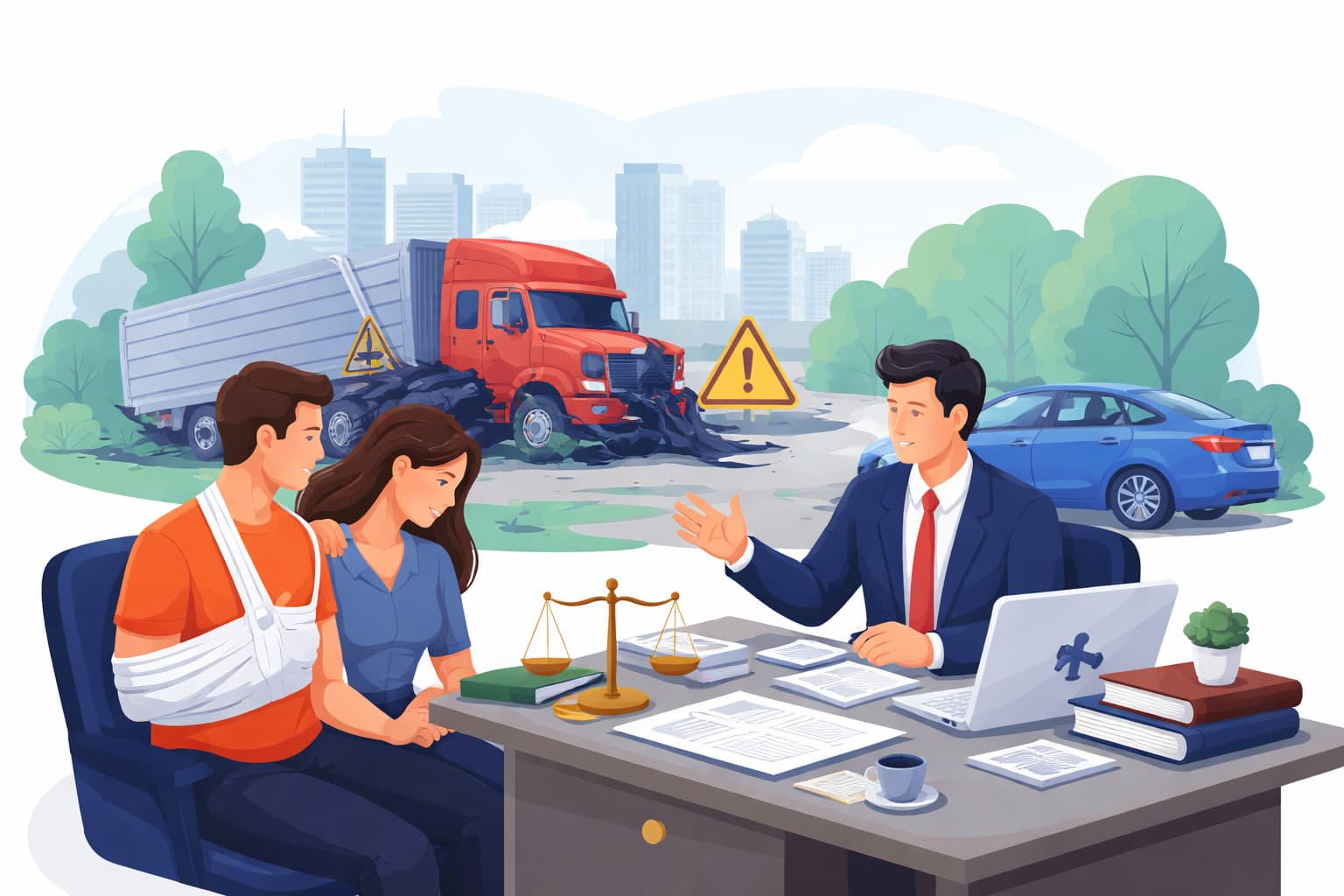
A collision with an 80,000-pound semi-truck is fundamentally different from an accident involving two passenger cars. The sheer size and weight of commercial vehicles mean the potential for serious, life-changing injuries is much higher. For anyone who has driven the Massachusetts Turnpike (I-90) or navigated the Southeast Expressway (I-93) alongside these massive vehicles, this reality is clear. But the differences extend far beyond the physical impact.
One of the most significant complexities is determining who is legally responsible. In a standard car crash, you are typically dealing with one other driver. In a commercial truck accident, multiple parties could share the blame.
- The Truck Driver: Was the driver fatigued, distracted, or operating the vehicle under the influence? Did they violate traffic laws?
- The Trucking Company (Motor Carrier): Did the company pressure the driver to violate hours-of-service rules? Did they fail to conduct proper background checks, provide adequate training, or properly maintain their fleet?
- The Truck Manufacturer: Was there a defect in the truck or one of its essential parts, like the brakes or tires, that caused the crash?
- The Maintenance/Repair Shop: Did a third-party mechanic perform faulty repairs that contributed to a mechanical failure?
- The Cargo Loaders: Was the truck’s trailer improperly loaded, making it unbalanced and difficult to control?
Each of these possibilities introduces new layers to a personal injury claim. Because trucking is a federally regulated industry, specific rules set by the Federal Motor Carrier Safety Administration (FMCSA) regarding driver qualifications, vehicle maintenance, and how many hours a driver can be on the road are also central to the case.
The Key Components of Your Truck Accident Settlement
To receive a settlement that truly reflects what you have been through, it’s important to account for every single way the accident has affected you. These effects are grouped into two main categories: economic damages and non-economic damages. A thorough calculation of both is the foundation of a fair semi-truck accident settlement.
Calculating Economic Damages
Economic damages refer to the specific, calculable financial losses you have incurred because of the accident. These are the costs that come with a receipt or an invoice. The goal is to restore you to the financial position you were in before the crash occurred.
Common economic damages include:
- All Medical Expenses: This covers everything from the initial ambulance ride and emergency room visit to surgeries, hospital stays, physical therapy, prescription medications, and any anticipated future medical care.
- Lost Wages: If you were unable to work while recovering, this includes the income you lost during that time.
- Loss of Future Earning Capacity: If your injuries prevent you from returning to your previous job or limit your ability to work in the future, this compensates you for the difference in your lifetime earnings.
- Property Damage: This includes the cost to repair or replace your vehicle and any other personal property that was damaged in the collision.
- Out-of-Pocket Costs: This can include transportation to medical appointments, home modifications like a wheelchair ramp, or hiring help for household chores you can no longer perform.
Keeping meticulous records of these expenses is essential for proving their value to the insurance company.
Accounting for Non-Economic Damages
Non-economic damages are just as real as economic ones, but they don’t come with a price tag. These damages are meant to compensate you for the intangible, personal ways the truck accident has diminished your quality of life. Because they are subjective, they are often more difficult to calculate and can be a major point of contention during settlement negotiations.
Non-economic damages may include compensation for:
- Pain and Suffering: This refers to the physical pain, discomfort, and emotional distress caused by your injuries.
- Mental Anguish: This can include conditions like anxiety, depression, fear, or post-traumatic stress disorder (PTSD) stemming from the traumatic event.
- Loss of Enjoyment of Life: This compensates for the inability to participate in hobbies, activities, or life experiences that you previously enjoyed.
- Permanent Disfigurement or Scarring: This addresses the physical and emotional impact of lasting changes to your appearance.
- Loss of Consortium: In some cases, a spouse may have a claim for the loss of companionship, support, and intimacy resulting from their partner’s injuries.
These damages acknowledge the profound human cost of a serious accident, recognizing that your losses go far beyond just medical bills.
Critical Steps to Take After a Truck Accident
Once you have received initial medical attention and are back home, the actions you take can significantly influence your ability to secure a fair settlement. The period after a truck crash is a time for healing, but it is also a time when important evidence can be preserved.
Document Everything You Can Remember
Your memory of the event is a valuable piece of evidence. As soon as you are able, write down every detail you can recall about the accident. Don’t worry about perfect grammar or sentence structure; just get the information down.
- What was the weather like?
- What were the road conditions?
- What did you see, hear, and feel right before, during, and after the crash?
- What did the truck driver say to you or to anyone else at the scene?
These notes can help you recall critical details later on and ensure your account of the events remains consistent.
Preserve Evidence and Keep Records Organized
Physical evidence and organized documentation are the building blocks of a strong personal injury claim. It is crucial to be methodical in collecting and storing all related paperwork.
- Create a file for medical records. Keep all hospital discharge papers, doctor’s notes, physical therapy reports, and bills in one place.
- Maintain a log of all expenses. Save receipts for everything from prescription co-pays to the cost of gas for driving to appointments.
- Do not get your car repaired immediately. Your vehicle is a major piece of evidence. It should be professionally photographed and inspected before any repairs are made.
- Take photos of your injuries. Document your physical injuries as they heal to show the recovery process.
Having this information organized will make it much easier to demonstrate the full extent of your damages.
Be Cautious When Speaking with Insurance Adjusters
Shortly after the accident, you will likely receive a call from an insurance adjuster representing the trucking company. It is important to remember that this person’s job is to protect their company’s financial interests, which means paying out as little as possible.
They may sound friendly and concerned, but you should be very careful in your conversation.
- Avoid giving a recorded statement without first seeking legal guidance.
- Do not speculate on who was at fault or admit any blame.
- Do not downplay your injuries or say you “feel fine.” The full extent of some injuries may not be apparent for days or even weeks.
- Never sign any documents or accept a quick settlement offer without having it reviewed.
A premature settlement offer is almost always far less than what you may truly be entitled to.
How Liability Is Established in a Massachusetts Commercial Truck Crash
To get the settlement you deserve, you must be able to prove that the negligence of another party caused your injuries. Under Massachusetts law, this means showing that someone had a duty to act with reasonable care, they breached that duty, and that breach directly led to the accident and your resulting damages. In truck accident cases, this involves a deep investigation into the circumstances of the crash.
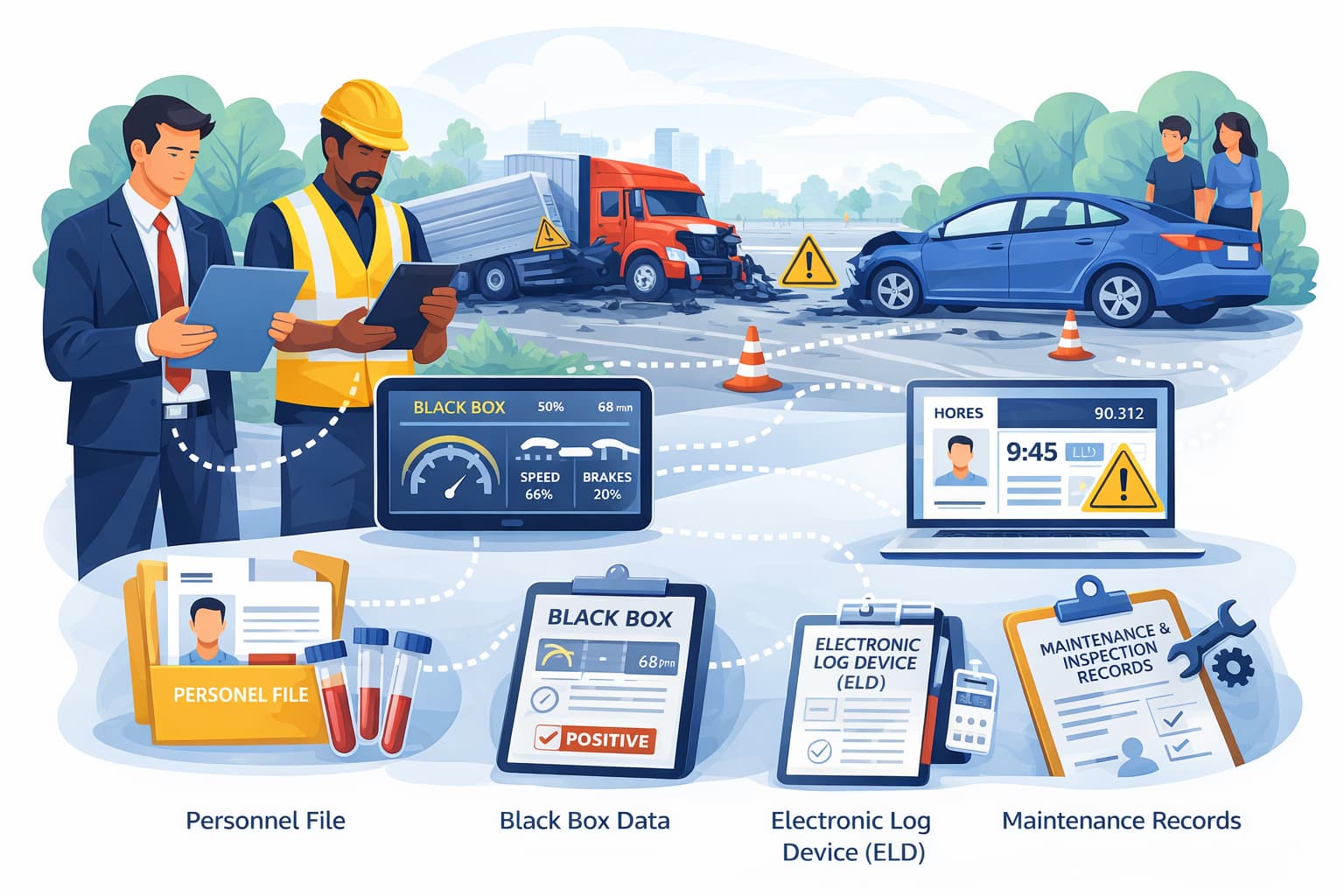
The evidence required often goes far beyond a simple police report. Key pieces of information needed to establish liability include:
- The Truck’s Electronic Data Recorder (EDR): Often called the “black box,” this device records crucial information like the truck’s speed, braking activity, and steering inputs in the moments before a crash.
- The Driver’s Electronic Logging Device (ELD): This tracks the driver’s hours of service to see if they were driving longer than legally allowed, which can indicate fatigue.
- The Driver’s Personnel File: This can show the driver’s history, training records, and any previous violations or accidents.
- Truck Maintenance and Inspection Records: These documents can reveal if the trucking company neglected required maintenance, leading to a mechanical failure.
- Post-Accident Drug and Alcohol Test Results: Federal law requires drivers to be tested after any serious accident.
- Witness Statements and Expert Testimony: Accounts from people who saw the crash and analysis from accident reconstruction specialists can help piece together exactly how the collision occurred.
Gathering and analyzing this evidence is a complex task, as trucking companies are often reluctant to hand over information that could prove their fault.
The Settlement Negotiation Process: What to Expect
The vast majority of personal injury cases, including those involving commercial trucks, are resolved through a settlement rather than a court trial. The process generally begins after you have completed the bulk of your medical treatment and the full scope of your damages is known.
The typical steps in a settlement negotiation are:
- The Demand Letter: Your legal representative will compile all the evidence, medical records, and expense reports into a comprehensive demand package. This letter will be sent to the insurance company, outlining the facts of the case, establishing liability, and demanding a specific amount for a settlement.
- The Initial Offer: The insurance company will review the demand and respond with a counteroffer. This first offer is almost always very low and should not be seen as the final amount.
- A Series of Negotiations: A period of back-and-forth negotiation will follow. Your representative will argue on your behalf, using the evidence to counter the insurance company’s attempts to downplay your injuries or shift blame.
This process requires patience and a firm understanding of the value of your claim. Having a strong advocate in your corner is essential to leveling the playing field against a large insurance corporation. The goal is to reach a fair agreement that covers all your past, present, and future needs related to the accident.
Semi-Truck Accident Settlement FAQs
Here are answers to some common questions about the truck accident settlement process.
What if I was partially at fault for the truck accident in Massachusetts?
Massachusetts follows a “modified comparative negligence” rule. This means you can still recover damages as long as you are not found to be 51% or more at fault for the accident. If you are found to be partially at fault (for example, 20%), your final settlement amount would be reduced by your percentage of fault.
How long do I have to file a truck accident claim in Massachusetts?
In Massachusetts, the statute of limitations for most personal injury claims is three years from the date of the accident. This is a strict deadline, and if you miss it, you will likely lose your right to seek compensation.
What happens if the truck driver was an independent contractor?
This can make the case more complicated. A trucking company might try to argue they are not responsible for the actions of an independent contractor. However, a thorough investigation can often show that the company still exerted enough control over the driver to be held liable for their negligence.
Get the Support You Need for Your Semi Truck Accident Settlement
Dealing with the consequences of a serious truck accident can be a difficult and demanding experience. The personal injury attorneys at Brooks Law Firm are dedicated to fighting for the rights of people injured in Boston and across Massachusetts.
We understand the tactics that trucking companies and their insurers use to protect their profits, and we are prepared to counter them at every turn. Our team will handle every aspect of your case, from investigating the crash and gathering evidence to negotiating for the full and fair compensation you deserve.
We provide legal support in English, Spanish, and Portuguese. Contact us today at (617) 245-8090 or through our online form for a free consultation to discuss your case and learn more about your options.


