


What Are the Chances of Winning a Personal Injury Lawsuit?
If you’ve been injured because of someone else’s actions, it’s natural to wonder about your chances of winning a personal injury lawsuit. While there is no magic number or simple percentage, the strength of your case depends on a collection of specific, provable factors. The outcome isn’t a matter of luck; it’s determined by the clarity of the evidence, the extent of your documented injuries, and the skill with which your story is told.
This discussion will explore the essential elements that influence the potential of a personal injury claim, from proving another party’s fault to the crucial role of thorough documentation.
To better understand your chances of success, contact an experienced personal injury lawyer today for a free, no-obligation case evaluation.
Key Takeaways about Your Chances of Winning a Personal Injury Lawsuit
- A “win” in a personal injury case often means achieving a fair settlement outside of court, which is how the majority of cases are resolved.
- The success of a claim heavily relies on proving liability, meaning another party was legally responsible for the accident.
- Strong evidence, including medical records, police reports, and witness statements, is fundamental to building a solid case.
- The amount of compensation is directly tied to the documented damages, which include both financial costs and non-economic impacts like pain and suffering.
- Massachusetts law on comparative negligence can affect the outcome if the injured person is found to be partially at fault for the incident.
Redefining “Winning” in a Massachusetts Personal Injury Case

When people think about “winning” a lawsuit, they often picture a dramatic courtroom scene with a judge and jury. While that can happen, it’s not the most common path. The vast majority of personal injury cases are resolved long before they reach a trial.
A “win” in the context of personal injury law most often means securing a fair settlement through negotiation. A settlement is a formal agreement where the at-fault party’s insurance company agrees to pay you a certain amount of money to resolve your claim. In return, you agree not to pursue the case any further. This outcome is a victory because it provides the financial resources you need for your recovery without the time, expense, and stress of a full trial.
In fact, data from the U.S. Department of Justice shows that only a very small percentage of personal injury cases ever go to trial. The rest are settled, dismissed, or resolved through other means. A successful settlement allows you to cover medical bills, make up for lost wages, and receive compensation for your pain and suffering, helping you get your life back on track.
Key Factors That Influence Your Personal Injury Claim
The potential success of a personal injury claim isn’t based on a single piece of information. Instead, it’s built upon a foundation of several key elements working together. Think of it like building a bridge; each component must be strong and properly placed for the entire structure to hold up.
Establishing Clear Liability
The first and most important factor is liability, which is a legal term for responsibility. To have a successful claim, you must be able to show that another person or entity was negligent and that their negligence caused your injuries. Negligence means they failed to act with reasonable care, leading to harm.
For example, a driver texting while navigating traffic near the Museum of Science is not acting with reasonable care. If that driver causes an accident, they are likely liable for the injuries that result. It’s also important to understand the rule of comparative negligence in Massachusetts. Under this statute, you can still recover damages even if you were partially at fault, as long as your share of the blame is not more than 50%. However, your final compensation award would be reduced by your percentage of fault.
Proving liability is the cornerstone of your entire case.
The Power of Strong Evidence
A claim is only as strong as the evidence that supports it. You can’t just say someone was at fault; you have to prove it. The more high-quality evidence you have, the better your position will be during settlement negotiations or, if necessary, in court.
Here are some of the most powerful types of evidence in a personal injury case:
- Official Reports: This includes police reports from a car accident or incident reports from a slip and fall on a business property. These documents provide an official, initial account of what happened.
- Medical Documentation: Your medical records are critical. They create a direct link between the incident and your injuries, detailing the diagnosis, treatment, and prognosis from medical professionals.
- Visual Evidence: Photos and videos from the scene of the accident, of your injuries, and of any property damage can be incredibly persuasive. A picture truly can be worth a thousand words.
- Witness Testimony: Statements from people who saw the accident happen can corroborate your version of events and provide an objective perspective.
- Expert Opinions: In some cases, testimony from accident reconstructionists, medical experts, or economic experts may be needed to explain complex aspects of the case.
This collection of evidence works together to paint a clear picture of what happened and why the other party is responsible.
Documenting Your Damages Thoroughly
Once liability is established, the focus shifts to damages. This legal term refers to all the losses you have suffered because of the injury. To receive fair compensation, you must be able to document these losses completely. Damages generally fall into two categories.
The first is economic damages, which are the tangible financial costs associated with your injury. The second is non-economic damages, which compensate you for the less tangible, personal losses you have endured.
Some key damages to document include:
- Medical Expenses: This covers everything from the initial emergency room visit and hospital stay to ongoing physical therapy, medications, and future medical care you may need.
- Lost Wages and Earning Capacity: If your injury forced you to miss work, you can be compensated for that lost income. If the injury affects your ability to earn a living in the future, that can also be part of your claim.
- Pain and Suffering: This compensates you for the physical pain, emotional distress, and overall loss of enjoyment of life resulting from the injury.
- Out-of-Pocket Costs: Keep track of any other expenses you’ve had, such as transportation to doctor’s appointments or the cost of medical equipment.
Careful and organized documentation of every single loss, big or small, is essential for demonstrating the full impact the injury has had on your life.
What Steps Can You Take to Improve Your Case’s Potential?
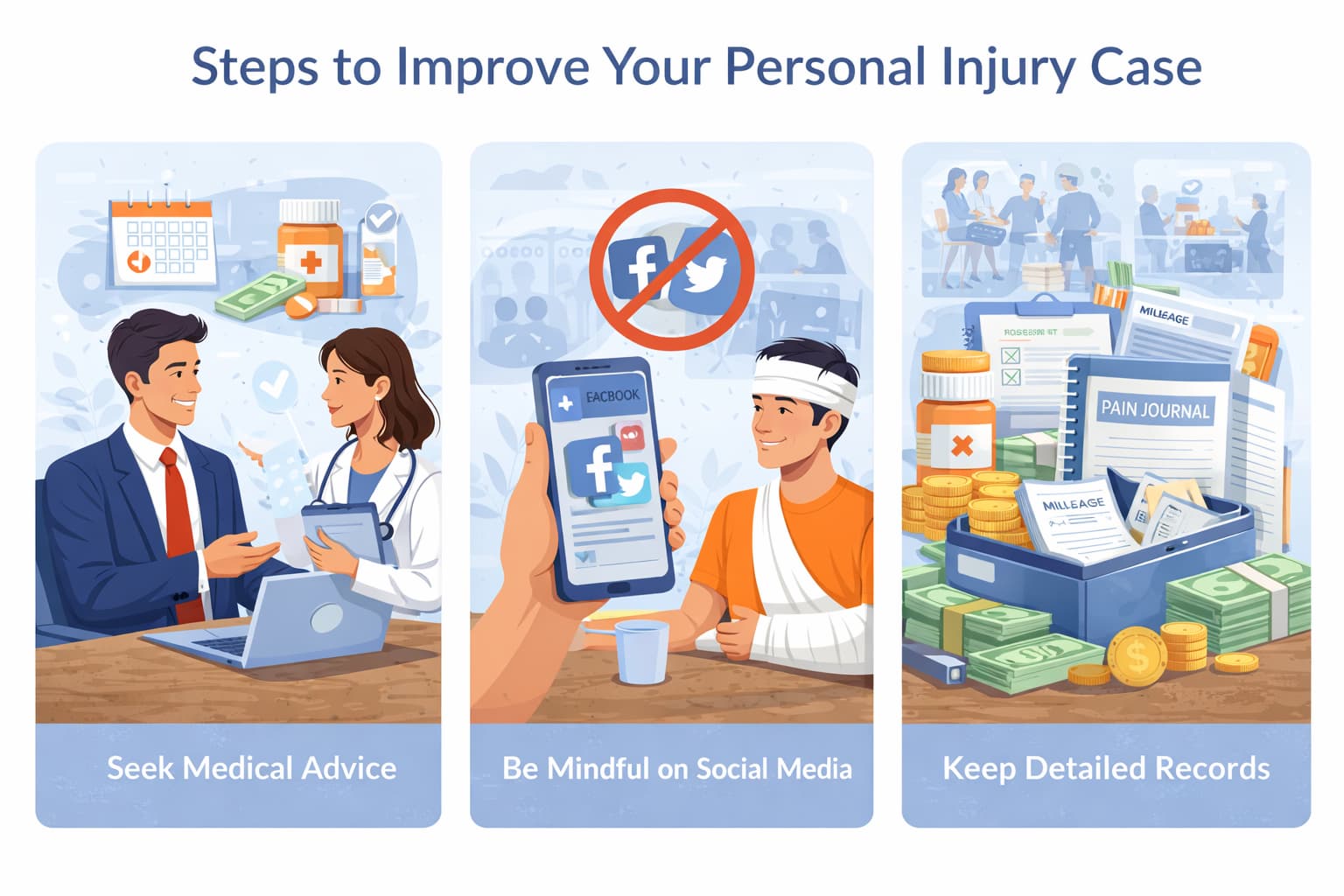
While you can’t change the facts of what happened, you can take certain actions after an injury to protect your rights and strengthen your potential claim. These steps are best taken once you are safely home and have addressed your immediate medical needs.
Seek and Follow Medical Advice
One of the most important things you can do is get prompt medical attention and diligently follow your doctor’s treatment plan.
- Creates a Clear Record: Consistent medical care establishes a clear timeline and reinforces the connection between the accident and your injuries.
- Avoids “Gaps in Treatment”: Insurance companies may argue that a long break in your medical care means your injuries weren’t that serious or were caused by something else.
- Shows You Are Serious About Recovery: Following through with appointments, physical therapy, and prescribed treatments demonstrates your commitment to getting better, which is an important part of your story.
Your health should always be your top priority, and taking care of it also happens to be one of the best ways to support your legal claim.
Be Careful with What You Share
In today’s connected world, it’s crucial to be mindful of what you say and post online. Insurance companies often look for any information they can use to question the severity of your injuries.
Refrain from posting details about your accident, your injuries, or your daily activities on social media platforms like Facebook, Instagram, or Twitter. A photo of you at a family barbecue, while seemingly innocent, could be used by an adjuster to argue that you aren’t as injured as you claim. It is also wise to avoid giving a recorded statement to the at-fault party’s insurance company without first consulting with a legal professional. Their questions are often designed to get you to say something that could weaken your claim.
Keep Detailed Records
Organization is key. The more detailed your records are, the easier it will be to calculate your full damages. Start a folder or file specifically for your case and keep everything related to the incident and your recovery.
- Create a Pain Journal: Each day, jot down notes about your pain levels, any physical limitations you experience, and how the injury is affecting your mood and daily life. This can become powerful evidence for your pain and suffering claim.
- Organize All Paperwork: Keep every medical bill, receipt for prescriptions, pay stub showing lost work, and any letters you receive from insurance companies.
- Track Your Mileage: Note the miles you drive to and from doctor’s appointments, therapy sessions, and pharmacies. This is a real cost that can be included in your damages.
This careful record-keeping will provide your attorney with the detailed information needed to build the strongest case possible on your behalf.
The Role of Legal Representation in Your Case
Having an experienced personal injury lawyer on your side can significantly impact your case’s direction. While you focus on healing, a lawyer handles the complex legal and administrative tasks required to move your claim forward. Their goal is to protect your rights and pursue the full compensation you are owed.
An attorney can assist by:
- Conducting a Full Investigation: They can gather evidence you might not have access to, such as security camera footage, cell phone records, or expert analysis of the accident scene.
- Calculating Your Total Damages: A lawyer knows how to account for not just your current bills but also future medical needs, long-term lost income, and the full value of your pain and suffering.
- Handling All Communications: They will manage all discussions with insurance adjusters, who are trained to minimize payouts. This allows you to avoid the stress and potential pitfalls of negotiating on your own.
- Preparing for Litigation: If the insurance company refuses to offer a fair settlement, an attorney will be prepared to file a lawsuit and represent you in court.
Having a dedicated advocate ensures that your case is presented professionally and that you are on a level playing field with the insurance company.
Winning a Personal Injury Lawsuit FAQs
Here are answers to some common questions that arise when considering a personal injury claim in Massachusetts.
How long does a personal injury lawsuit take in Massachusetts?
The timeline for a personal injury case can vary greatly. A straightforward claim with clear liability might settle in a few months. A more complex case, especially one that goes to trial, could take a year or more to resolve. Factors like the severity of the injuries and the willingness of the insurance company to negotiate play a big role.
Do I have to go to court to win my personal injury case?
No, most personal injury cases are settled out of court. A settlement is often preferable as it is faster and less uncertain than a trial. A case typically only goes to court if the insurance company is unwilling to offer a fair settlement amount during negotiations.
What is the statute of limitations for a personal injury claim in Massachusetts?
In Massachusetts, you generally have three years from the date of the injury to file a lawsuit. This time limit is known as the statute of limitations. If you miss this deadline, you will likely lose your right to pursue compensation. There are some exceptions, so it is important to understand how the deadline applies to your specific situation.
How much does it cost to hire a personal injury lawyer?
Most personal injury attorneys work on a contingency fee basis. This means you do not pay any upfront fees. The lawyer’s fee is a percentage of the settlement or award you receive. If you do not win your case, you do not owe the attorney a fee for their time.
Discuss Your Case with Our Dedicated Team
At Brooks Law Firm, we are committed to helping injured individuals and their families seek justice. Our team is here to listen to your story, answer your questions, and provide clear guidance on how to proceed. We handle the legal process so you can concentrate on what matters most—healing.
With legal support available in English, Spanish, and Portuguese, we are ready to help. You can call or text us anytime for a direct conversation about your situation. Contact Brooks Law Firm today at (617) 245-8090 or through our online form for a free, no-obligation consultation to learn more about your rights.


